The Asian American Writers' Workshop, the New York literary nonprofit that has spent 35 years building a home for Asian diasporic writers, laid off its last two staff members on August 3 and now runs entirely on volunteers. Programming is paused until further notice. Novelist Ed Lin, who has been part of the Workshop since 1992, took over as unpaid interim executive director on August 7, the same day executive director Jafreen Uddin left after six years. The organization's office in Chelsea may be the next thing to go.
This is not a small nonprofit failing quietly. It is the loss, at least for now, of the institution that trained a generation of Asian American writers.
What happened at the Asian American Writers' Workshop?
The sequence moved fast over the summer. On July 23, AAWW's board announced that Uddin, the first woman to lead the organization since its founding, would step down on August 7, crediting her with nearly 500 events over six years and with building The Margins, its online magazine, into a national platform. The board statement said nothing about money.
Eleven days later, the Workshop laid off its remaining two employees. On August 4, it announced Lin as interim director and a shift to an all volunteer structure, with major programming paused. Lin held open houses from August 11 to 13 to hear from the community, invoking the Workshop's early days, when, in his words, writers "met in borrowed spaces, and supported each other."
The Workshop's office sits at 18 West 21st Street. Lin has said he expects the organization may lose the space because it cannot cover the rent.
The numbers behind the collapse
AAWW's public tax filings, available through ProPublica's Nonprofit Explorer, show how quickly the finances turned. In fiscal 2022, the Workshop brought in about $1.25 million and ended the year roughly $81,000 in the black. In 2023, revenue fell to about $333,000 against more than $1 million in expenses, a loss of about $727,000. In 2024, revenue recovered to about $686,000, but expenses rose to nearly $1.39 million, and the Workshop lost another $702,000.
Two consecutive years of seven hundred thousand dollar deficits will empty the reserves of most arts organizations of this size. The harder question is why it happened, and the two sides of this story do not agree.
Two accounts of what went wrong
Lin has attributed the collapse largely to the cuts in public arts funding and in diversity, equity and inclusion grantmaking that swept through the nonprofit sector in 2024 and 2025. Many identity based arts groups have described the same squeeze over that period, and AAWW's revenue drop is consistent with it.
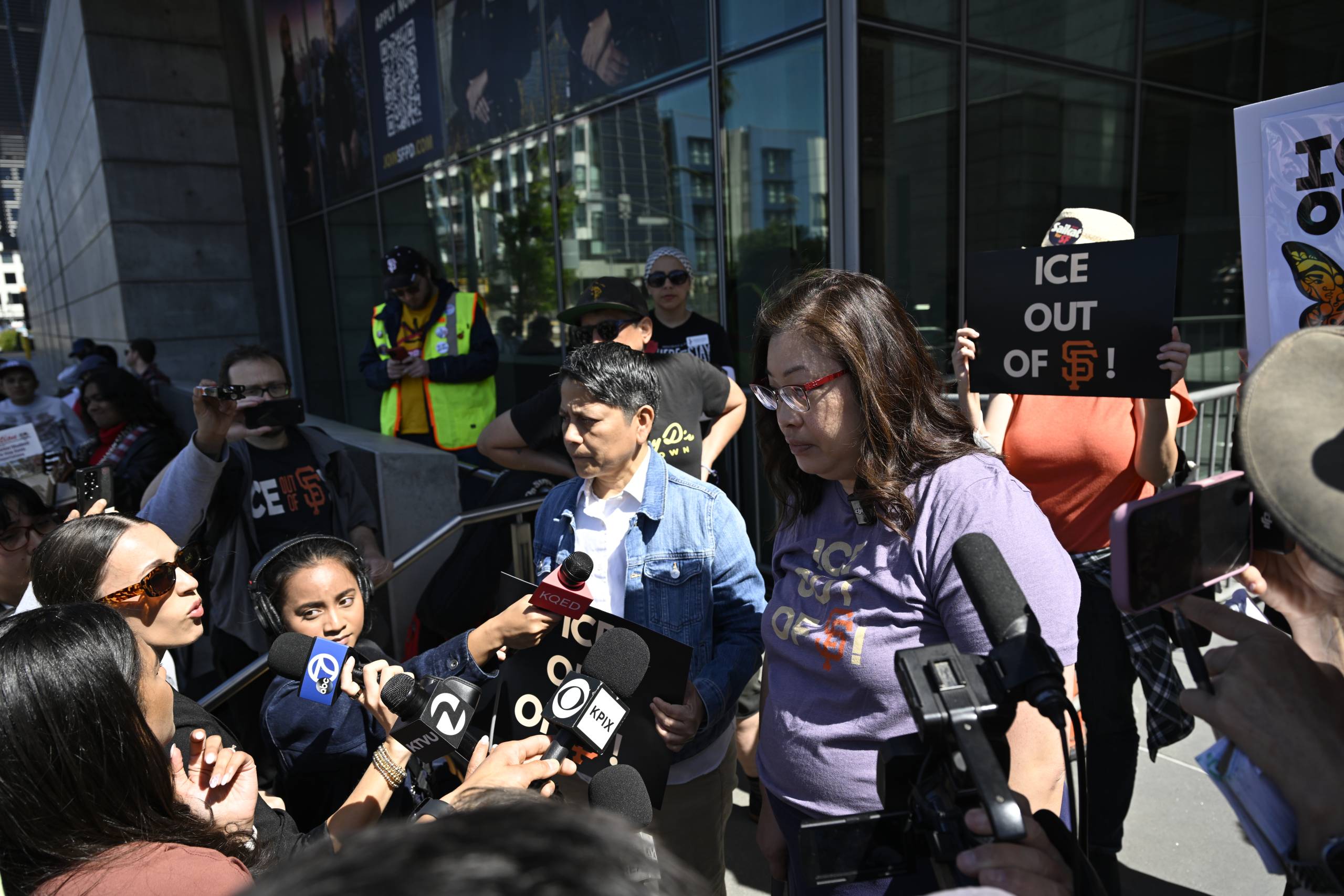
The AAWW Union, founded in 2018, tells a different story. Its members say leadership never disclosed budgets despite repeated requests. At a virtual union town hall on August 13 attended by more than 50 people, Noel Pangilinan, speaking for the union, called the layoffs "shocking" and "infuriating" and said Uddin had stepped down "after six disastrous years," according to AsAmNews.
Both things can be true at once. A funding environment can turn hostile and a leadership team can respond badly to it. Uddin has not responded publicly to the union's criticism, and AsAmNews, which first reported the layoffs in detail, was unable to reach her.
Why AAWW matters
Four writers, Curtis Chin, Christina Chiu, Marie Myung-Ok Lee and Bino A. Realuyo, founded the Workshop in 1991, at a time when there were few places in American publishing where an Asian American writer could be read as something other than a curiosity. Over three decades it became a workshop, a reading series, a fellowship program, a magazine and a front door into the industry.
The writers who came through its orbit include Cathy Park Hong, whose Minor Feelings became one of the defining Asian American books of its decade, Min Jin Lee, author of Pachinko, and Lisa Ko, whose The Leavers won the PEN/Bellwether Prize. Institutions like this rarely get credit in the acknowledgments pages. They are where young writers first get read by people who understand what they are trying to do.
When one disappears, the damage does not show up right away. It shows up five years later, in the books that never got written because nobody was running the workshop that would have produced them.
What Ed Lin has promised
Lin, the first writer to win three Asian American Literary Awards, has made commitments specific enough to hold him to. He has said contributors to The Margins who are owed money will be paid, including kill fees. And he has said that if he has not restored the equivalent of the two eliminated jobs by the end of 2027, he will resign.
That is an unusual promise from a volunteer leader, and it gives the community a clear measure of whether the rebuild is working. The board says it is still searching for a permanent executive director.
What to watch
Three things will tell you whether AAWW survives in a recognizable form. First, whether it keeps the Chelsea space or moves to the borrowed spaces Lin keeps invoking. Second, whether Margins contributors actually get paid, which is the first test of the new leadership's word. Third, whether the board opens its books to the union and to the public, which is the only way the two competing explanations for the collapse can be settled.
Asian American arts organizations have spent the last two years learning how quickly institutional support can disappear. AAWW is the most prominent casualty so far. It is unlikely to be the last.