The Japanese American National Museum will reopen on January 23, 2027, a little more than two years after closing for renovation. The Little Tokyo institution has been dark since January 6, 2025. When it returns, the first thing visitors will walk into is 9,200 square feet of new first-floor gallery space opening with a show called In the Future We Call Now: Realities of Racism, Forging Democracy.
Read that title again. This is a museum built to hold the memory of wartime incarceration, and it is reopening with a permanent gallery whose name is about the present tense.
What is changing inside the building
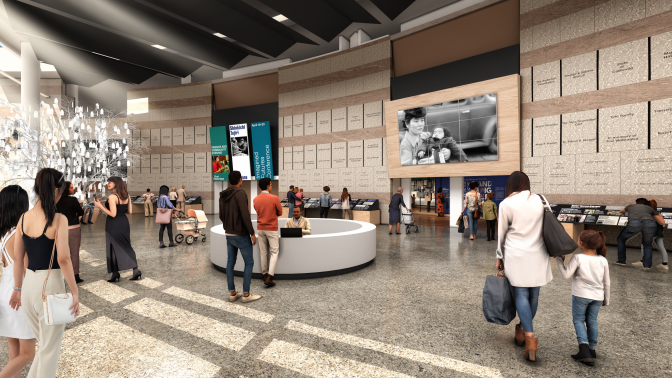
The renovation adds a new Pavilion with a curved glass facade at the main entry. The expanded first-floor galleries combine the original Weingart Galleries with space reclaimed from former hallways, meeting rooms, offices, and library space. The second floor gains roughly 5,500 square feet of exhibition space, which lets JANM host larger traveling and special shows than it could before.
The design work was done by Ralph Appelbaum Associates with HOK as consulting architects. Appelbaum is the firm behind the United States Holocaust Memorial Museum and the National Museum of African American History and Culture, which tells you something about the register JANM is reaching for.
Ann Burroughs, the museum's president and CEO, described the reopening as launching the institution into a new era, one that would let it serve as a beacon for civil rights and activate memory and the arts to shape a more just and hopeful future.
The opening exhibitions
The second floor opens with Pictures of Belonging: Miki Hayakawa, Hisako Hibi and Mine Okubo, bringing together roughly 80 paintings by three Japanese American women artists of the pre-war generation. Their work has never been shown together, and JANM says newly acquired pieces will be unveiled for the first time.
This is the kind of show that quietly corrects a record. Okubo is known, largely for Citizen 13660, her illustrated account of Topaz. Hibi and Hayakawa are known to specialists. Putting eighty canvases in one room by three women who painted before, during, and after incarceration makes an argument that individual reputations cannot.
Also on the second floor are four new interactive StoryFiles featuring June Aochi Berk, Takashi Hoshizaki, Mary Murakami, and George Takei, plus Lawson Iichiro Sakai. These use recorded interviews and AI-driven retrieval so a visitor can ask a question and get an answer in the subject's own recorded words.
That technology deserves scrutiny rather than applause on arrival. There is a real difference between an archive that answers questions and an archive that appears to converse, and a museum whose entire subject is the manipulation of national memory is a fitting place to ask what the difference does to a fourteen-year-old on a field trip. JANM says the responses are drawn strictly from actual interviews. That constraint is the whole ballgame, and it is worth asking the museum how it is enforced.
Why the timing of this reopening matters
JANM sits on Central Avenue in Little Tokyo, in a building that includes a former Nishi Hongwanji Buddhist temple where Japanese Americans stored their belongings before removal in 1942. It holds the largest collection of Japanese American history and culture in the world, spanning roughly 160 years.
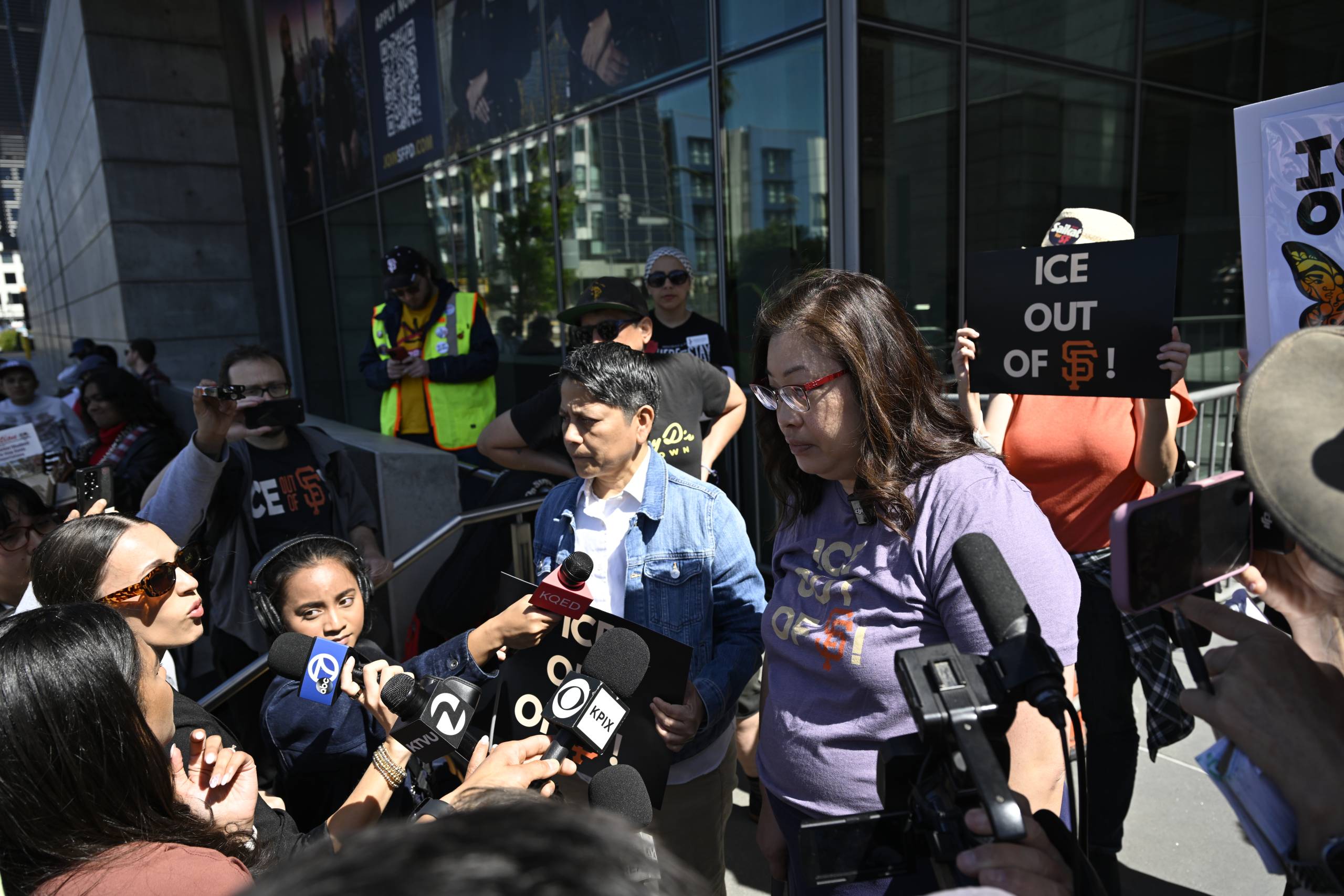
It is also where, in August 2025, federal immigration agents staged an operation outside the building, and deposition testimony released last month included agents describing that operation as politically motivated. A museum that exists to memorialize what happens when a government decides a population is a security problem watched a version of the argument play out on its own sidewalk. That is not an isolated case either, given how broadly current enforcement has reached into Asian American communities.
So when JANM says its reopening will connect incarceration history to current national conversations about race and democracy, that is not curatorial boilerplate. The institution has direct evidence.
What is coming after the reopening
The special exhibition schedule already runs years out. Ben Sakoguchi: Postcards from Camp and I Am an American: Nisei Soldier Experience, the latter from the National Museum of the United States Army, are both slated for 2027. A Generative Legacy of Care and Invocation of Beauty: The Life and Photography of Soichi Sunami are on the calendar for 2029.
Visitors will also be able to do archival research at the Hirasaki National Resource Center, and the archival viewing room will showcase mid-century art and design work by Ruth Asawa, S. Neil Fujita, and Isamu Noguchi.
The second floor adds classroom space to support the school program, which JANM says brings around 14,000 K-12 students through the museum each year. That number is the most important one in the announcement. The reopening is not really about a glass facade. It is about whether a generation of Los Angeles schoolchildren gets taught this history in the room where the objects are.
What two years dark cost
Closures of this length are dangerous for museums in ways that do not show up in a press release. Membership lapses. School districts build their field trip calendars around what is open, and once a route is dropped it takes years to restore. Donors who give annually find other places to give. Staff take jobs elsewhere.
JANM ran a traveling program during the closure to keep the collection in front of people, but a traveling program is not a building. The institution is effectively relaunching itself in a philanthropic environment that has gotten harder, at a moment when federal cultural funding is contracting and museums nationally are reporting flat or declining attendance against pre-2020 baselines.
It is also relaunching with a first-floor gallery whose title makes a political claim. That is a choice with consequences for fundraising, and the museum made it anyway. Whatever else is true about the reopening, nobody there is playing it safe.
If you are planning a visit
JANM reopens January 23, 2027 at 100 North Central Avenue in Little Tokyo. Anyone who has been waiting out the closure should expect the first months to be crowded, and school groups book the mornings.
Until then, the Chinese American Museum and the Little Tokyo walking routes remain the closest thing downtown has to a substitute, which is to say not much of one. Two years is a long time for a city to go without its own memory.