Aurora Hindu Temple Plot: What Court Filings Allege

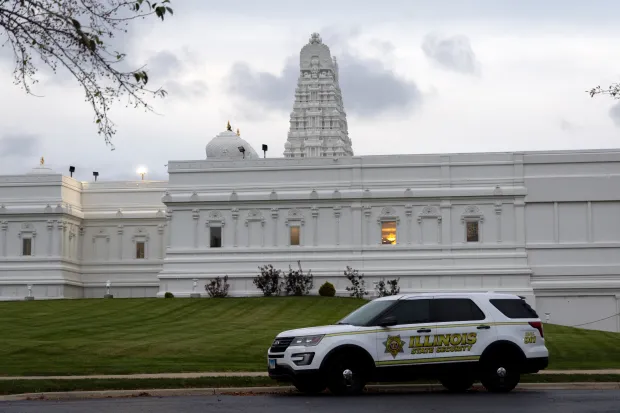
A 19-year-old from Palatine, Illinois, has been charged with making a terrorist threat and unlawful possession of weapons over an alleged plot to carry out a mass shooting at the Sri Venkateswara Swami Balaji Temple, a Hindu temple in Aurora, Illinois. The charges are allegations, and the details below come from court documents and police accounts as reported by AsAmNews, the Chicago Tribune and FOX 32.
The case has landed as South Asian American advocates warn about a rise in online hate. Here is what the filings say, what the community is saying in response, and what is still unknown.
What do the court filings say about the Aurora temple plot?
According to court documents filed by prosecutors and reported by the Chicago Tribune, the suspect wrote an eight-page document describing his thinking. He is described in the reporting as a self-identified white supremacist.
A co-worker told police that the suspect described driving to the temple on a Sunday in October with the intention of killing as many people as possible, according to the account. The co-worker said he returned home when his gun malfunctioned and he could not clear the jam. Police arrested him that night at a home he shared with his mother. The date of that Sunday is not specified in the source.
Every one of those details is an allegation. The reporting does not include a plea, a verdict or a trial date, and no court date is listed.
What else has been reported about the suspect?
The Chicago Tribune reported that the teenager recently signed a guardianship petition filed by a family friend. That petition alleged that his mother could not provide a stable home and that his father abused and abandoned him. Those are allegations made within the petition. FOX 32 reported that police say his mother has not been cooperating with the investigation.
How are South Asian American leaders responding?
Kiran Kaur Gill, executive director of the Sikh American Legal Defense and Education Fund, said, "No one should have to fear for their safety or their lives while gathering to worship and practice their faith." She also said the targeting of a Hindu temple is "not only an act of anti-Indian hatred."
Manjusha Kulkarni, co-founder of Stop AAPI Hate and executive director of the AAPI Equity Alliance, said the "Great Replacement" conspiracy theory "has a history of inspiring violent threats, targeted attacks, and mass shootings," and that the narrative in this case echoes it. Kulkarni also criticized political rhetoric that casts Indian people as a "demographic threat."
What does the new Stop AAPI Hate report say?
Stop AAPI Hate's new report, License to Hate, was released just before the coverage of this case. As quoted in the AsAmNews coverage, the report found that online slurs against South Asian Americans surged 109 percent from 2023 to 2025, and that 71 percent of anti-Asian online threats of violence targeted South Asians. Those figures are cited as reported and have not been independently checked against the full report here.
No source ties the report's findings to this suspect. The link between the two is context, not evidence of cause.
What happens next?
The source gives no hearing date, so the next public step in the case is not yet known. Gill's statement names what communities are asking for: the ability to gather and worship without fear.