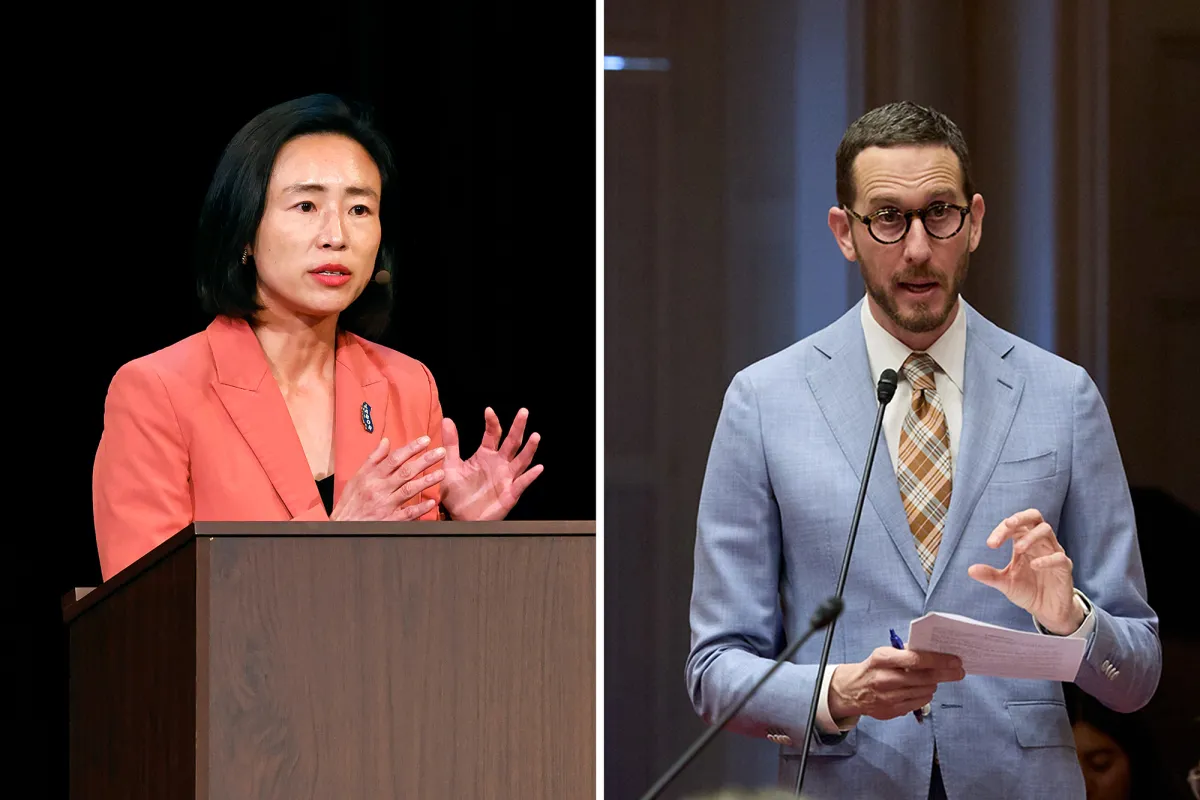
San Francisco is about to pick its first new member of Congress in nearly four decades, and the two finalists disagree about almost everything except their party. On November 3, Democrats Scott Wiener and Connie Chan face each other in the general election for California's 11th Congressional District, the seat Nancy Pelosi held for 39 years, according to Ballotpedia. Wiener led the June primary with 40.7 percent to Chan's 29.7 percent. In the final weeks, two issues have sharpened the contrast: housing and artificial intelligence.
Who are Scott Wiener and Connie Chan?
Wiener has been a California state senator since 2016 and says he has authored more than 100 state laws on affordability and public safety, Ballotpedia reported. He is best known for pushing to build more housing and for his work on AI safety legislation. He has endorsements from California Attorney General Rob Bonta and the state Democratic Party.
Chan has served on the San Francisco Board of Supervisors since 2020, representing the Richmond District, and has centered her campaign on affordability. "I'll work to create housing our working families can afford," she said, according to Ballotpedia. She has endorsements from Pelosi, Senator Adam Schiff and activist Saikat Chakrabarti. If elected, Chan, a Chinese American immigrant, would represent one of the most historically significant Chinese American communities in the country.
The AI divide
At the Common Ground conference on October 4, the candidates laid out sharply different visions for regulating artificial intelligence, AsAmNews reported.
Wiener argued for strong regulation focused on preventing catastrophic risks, such as attacks on the power grid or autonomous weapons. "We must not let that happen with A.I.," he said. His record is the most extensive of any candidate in the country on the issue. His 2024 bill SB 1047, which would have required safety measures including the ability to shut down advanced models, passed the legislature but was vetoed by Governor Gavin Newsom. His follow-up, SB 53, signed in September 2025, requires safety frameworks and whistleblower protections at advanced AI companies, and became a model for New York's RAISE Act, according to AsAmNews.
Chan took a more skeptical stance on the industry itself. She has advocated slowing AI development and pushed back on framing it as a race with China. "Why are we developing these technologies? Who is it for? Who does it benefit?" she asked. She co-sponsored a proposed 45-day moratorium on new data centers in San Francisco and signed a pledge opposing company bailouts and data center giveaways.
Why this race matters to Asian Americans
San Francisco's Asian American community is large, politically engaged and deeply divided on many local issues, including housing density, public safety and education. Chinatown, the Richmond and the Sunset have long been the base of Chinese American political power in the city.
The AI debate lands on those communities in specific ways. Bay Area Asian Americans are heavily represented in the tech workforce, both among the engineers building AI and among the workers whose jobs it may change. Rhetoric about an AI race with China also carries risks for Chinese Americans, who have repeatedly found themselves treated as suspects in national security debates. Chan's refusal to frame AI as a competition with China speaks directly to that concern.
Housing is the other fault line. Wiener's push to build more and faster appeals to younger renters priced out of the city. Chan's emphasis on community input and protecting existing residents speaks to longtime homeowners and tenants in neighborhoods worried about displacement. Many Asian American families have a foot in both camps.
What to watch on November 3
California's top-two system means both candidates will be on every ballot in the district, and Republicans and independents could decide the outcome. Turnout in Chinatown, the Richmond and the Sunset will be closely watched.
Whoever wins will take the seat at a moment when AI policy is moving from Sacramento to Washington. San Francisco is choosing not just a successor to Pelosi but one of the loudest voices in Congress on the technology that defines its economy.