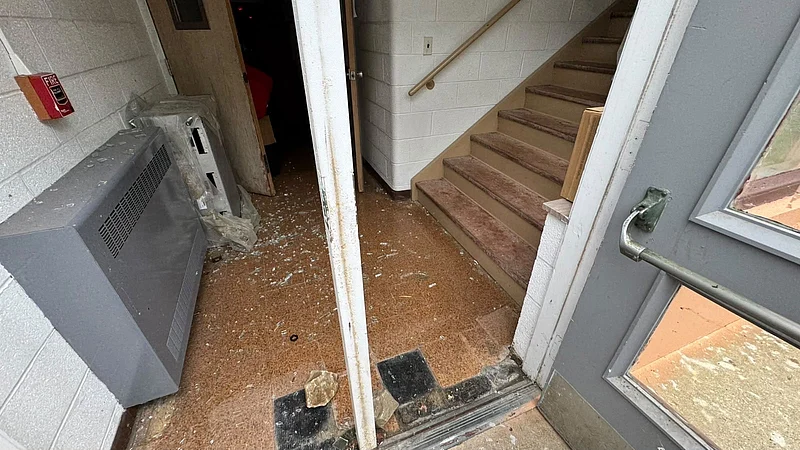
Worshippers were inside the Shree Swaminarayan Hindu Temple Vadtaldham in Richmond Heights, Ohio, on a Friday afternoon in early October when someone threw bricks at the building, shattering multiple windows, AsAmNews reported. Local authorities are reviewing surveillance footage from around the temple, in a suburb of Cleveland, to identify suspects. The Hindu American Foundation called it a "possible hate crime" and urged elected leaders to "publicly and unequivocally condemn hateful rhetoric" against Indian and Hindu American communities.
What happened in Richmond Heights?
The facts so far are limited. Bricks were thrown at the temple while people were inside. Windows were broken. Police are reviewing camera footage. No suspect has been publicly identified, and no motive has been confirmed. That uncertainty matters, and any fair account has to respect it: an attack on a house of worship is serious whether or not investigators ultimately classify it as a hate crime.
But for Hindu and Indian American communities, the incident did not happen in a vacuum, and that is why it drew national attention so quickly.
Why South Asian Americans are on edge
The past year has brought a sharp rise in hostile rhetoric aimed at Indian Americans, much of it online and some of it from political figures. Arguments over H-1B visas, tech jobs and immigration have repeatedly turned into attacks on Indian Americans as a group. In September, a Texas Republican candidate drew bipartisan condemnation for a post about South Asian college football fans.
Hindu temples have been vandalized in several states over the last few years, with graffiti, broken windows and threatening messages. Each incident on its own might look local. Together, they form a pattern that community groups have been documenting and asking officials to take seriously.
The data problem
One reason these incidents are hard to track is that hate crime data in the United States is incomplete. Reporting by local police agencies to the FBI is uneven, and categories do not always capture what communities experience. As we reported in September, FBI hate crime data likely undercounts attacks on Sikh and Hindu Americans. When the numbers are missing, it is easier for officials to treat each incident as isolated.
That is why groups like the Hindu American Foundation push for public statements from leaders after attacks. A statement does not solve a case, but it signals that the community's safety is a public concern, not a private one.
Temples as community centers
For many Indian American families, a temple is far more than a place of prayer. It is where children learn languages and classical dance, where elders spend their days, where weddings and festivals happen and where newly arrived immigrants find their first friends. An attack on a temple lands as an attack on that whole web of community life.
The timing adds weight. Diwali, the festival of lights and one of the most important holidays for Hindus, falls in the coming weeks, when temples across the country draw their largest crowds of the year. Communities in Ohio and elsewhere will be thinking about security as they prepare.
What comes next
The immediate questions are for investigators: who threw the bricks, and why. Beyond that, community advocates are asking for visible support from local officials, better security funding for houses of worship, and more consistent hate crime reporting so patterns can be seen and addressed.
For the congregation in Richmond Heights, the windows can be replaced. The sense of safety inside will take longer to repair.