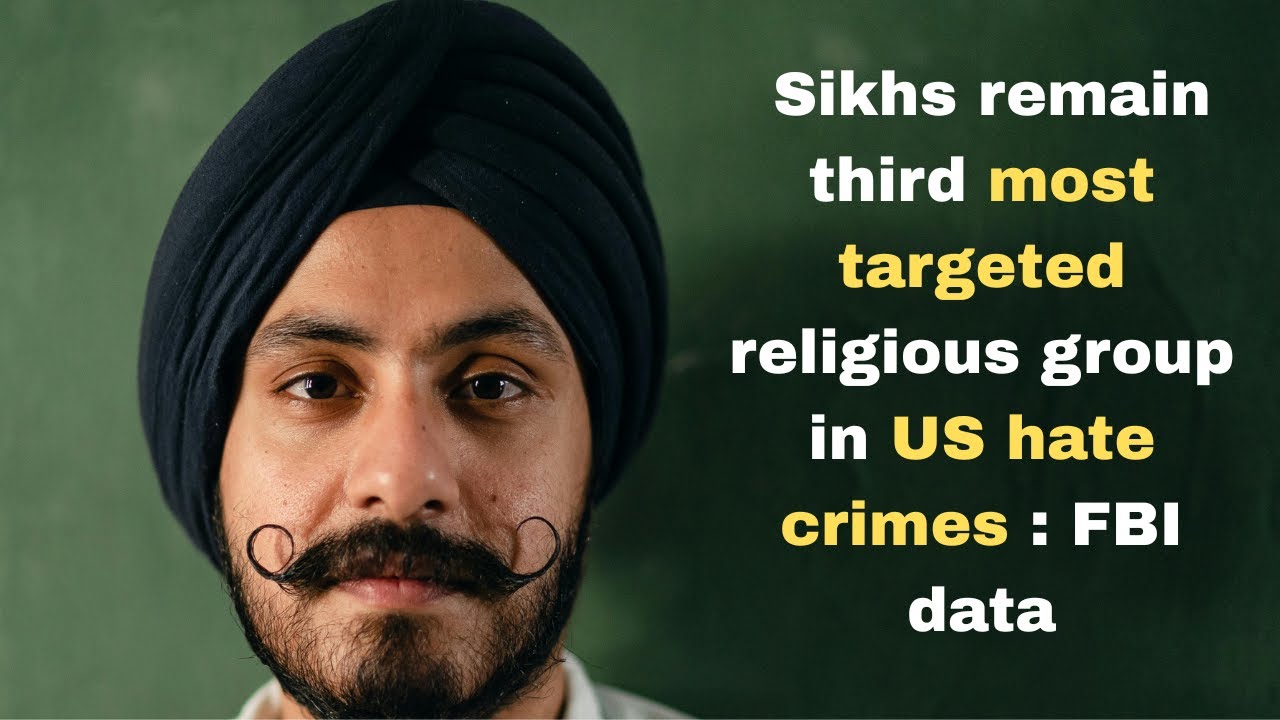
The FBI's 2025 hate crime data logged roughly 189 anti-Sikh offenses and 32 anti-Hindu offenses, alongside about 418 offenses classified as anti-Asian. Advancing Justice AAJC responded with a warning that the totals understate the problem, and the Sikh Coalition noted a sharp year-over-year rise in anti-Sikh incidents.
Those numbers are worth reporting. The more useful story is what the categories cannot see, because the federal hate crime reporting system has no box for Indian Americans at all, and a system that cannot name a group cannot count crimes against it.
How federal hate crime data is actually assembled
Two facts govern everything else here.
First, reporting is voluntary. The FBI does not collect hate crime data. It receives it, from local and state law enforcement agencies that choose whether to participate. Thousands of agencies submit nothing. Many submit a formal zero, including agencies in jurisdictions where community organizations documented incidents that same year. A national total assembled this way is not a census. It is a sample of the departments that felt like filing.
Second, the classification happens at the local level, by an officer or a records clerk applying a bias category to an incident. That person decides whether a man attacked outside a gurdwara in a turban is an anti-Sikh case, an anti-Asian case, an anti-Muslim case because the assailant used a slur about a religion the victim does not practice, or no bias case at all.
Both filters run before anything reaches Washington.
Why Indian Americans fall through
The federal bias categories include race and ethnicity on one axis and religion on another. Anti-Asian sits on the first. Anti-Sikh and anti-Hindu sit on the second. There is no anti-Indian category, and there is no South Asian category.
The practical result is that a single victim can be sorted into any of several buckets depending on how the incident is written up. A Hindu family harassed over a temple gets one classification. A Sikh man assaulted gets another. A software engineer told to go back to his country gets a third, if he gets one at all. There is no way to reassemble those into a count of anti-Indian American hate, because the data was never structured to allow it.
This is the same disaggregation problem that runs through every federal dataset touching Asian America, just with sharper consequences. When the underlying numbers are about who got hit, the categories decide who is legible enough to be protected.
What gets lost when a category is missing
Consider the mechanics of a single case. A man is beaten outside a gurdwara in Queens. He wears a turban and keeps unshorn hair, both articles of Sikh faith. His attacker uses a slur about Muslims.
An officer writing that report has to pick. Anti-Sikh, because of who the victim is. Anti-Muslim, because of what the attacker believed. Anti-Asian, if the officer reaches for race instead of religion. Or nothing, because bias designation requires a judgment call the officer may not feel equipped to make and which invites scrutiny of the report.
Every one of those choices produces a different national statistic. None of them is wrong exactly. And the aggregate is a number that no longer corresponds to any coherent question you could ask about who is being attacked in this country.
Sikh advocacy organizations have made this point for twenty years, usually in the specific form of noting that the most common motive in anti-Sikh violence is a misidentification. The attacker thinks he is attacking a Muslim. The federal categories have no way to record that a crime was motivated by a bias against a group the victim does not belong to.
What the community counts look like instead
Sikh American organizations have been running their own documentation for more than two decades, starting in the weeks after September 11, when the first person killed in the wave of retaliatory violence was Balbir Singh Sodhi, a Sikh gas station owner in Mesa, Arizona, shot on September 15, 2001.
That history built an infrastructure of parallel counting. Gurdwaras report to community organizations. Legal advocacy groups track cases through courts rather than police reports. The Sikh Coalition and similar organizations maintain incident logs that consistently run ahead of the federal numbers, and they have spent years pushing the FBI to break out categories that reflect who is actually being targeted.
Anti-Sikh bias only became its own federal category in 2015, after sustained advocacy following the 2012 mass shooting at the Sikh Temple of Wisconsin in Oak Creek. Before that, the crimes existed and the category did not. That is a useful reminder that these classifications are political artifacts, not natural kinds. Somebody has to fight for each one.
Why this matters more in 2026 than it did in 2019
Hate crime data does real work. It drives Justice Department grant allocation, it shapes which jurisdictions get federal attention, and it is the evidentiary basis prosecutors reach for when arguing that a pattern exists rather than an incident.
Undercounting is therefore not a statistical embarrassment. It is a resource allocation decision made by omission. A community that does not appear in the data does not appear in the funding, and the AAJC framing that the real danger is hate becoming invisible is exactly right about the mechanism.
This lands in a year when South Asian Americans are visible in the wrong ways. The post-9/11 pattern of conflating Sikh, Hindu, Muslim, and Arab identity into one target has not gone anywhere. H-1B policy has become a live political fight with a racial subtext nobody bothers to hide. And immigration enforcement has widened in ways that reach naturalized citizens and visa holders alike.
Why victims do not report in the first place
Everything above assumes a crime reaches a police report. A large share never does, and the reasons are specific rather than general.
Language is the first barrier. A person who does not speak English fluently and is not offered an interpreter will often decline to file, and the incident stops existing. Language access requirements exist on paper in most large jurisdictions and are enforced unevenly.
Immigration status is the second. Someone with a pending case, an expired status, or a family member without documents makes a rational calculation about whether contact with law enforcement is worth it. In 2026, with enforcement operating at the scale it is, that calculation has gotten easier to make and the answer is usually no. Every enforcement expansion is, functionally, a hate crime reporting suppression program.
The third is simpler and harder to fix. People do not report because they do not believe anything will happen. Community organizations describe a version of this constantly, which is that a victim will tell a gurdwara or a temple or a family association what happened and never tell anyone with a badge, because telling the community produces support and telling the police produces paperwork.
That last dynamic is why parallel counting exists at all. The community numbers are not a protest against the federal numbers. They are what is left when people decide the federal system is not for them.
What better data would actually require
Three changes, none of them technically difficult.
- Mandatory reporting. Voluntary submission is the single largest source of error. Legislation to condition certain federal law enforcement funding on hate crime reporting has been introduced repeatedly and has never gone anywhere.
- Disaggregated categories. A South Asian or Indian American classification would not solve everything, but it would make a population visible that currently has to be inferred.
- Training at the point of classification. The decision that matters most is made by a patrol officer with a form. Departments that have invested in bias crime training report more, not because more happens there, but because more gets recognized.
None of this is new advocacy. Civil rights organizations have been asking for all three for years. What is new is that the federal apparatus is moving in the other direction, toward less demographic data collection rather than more, which is the same fight now playing out over workforce reporting and census categories.
How to read the numbers when they come out
Treat the federal totals as a floor, never as a measurement. Read the community organizations' own counts alongside them. And notice which categories exist, because that list is a record of which communities successfully argued for their own visibility, and which ones are still waiting.
And be careful with year-over-year comparisons, which are the most commonly misread figures in this entire dataset. A jump in a category often reflects more agencies reporting rather than more crimes occurring. A drop often reflects agencies dropping out. The Sikh Coalition's finding of a sharp rise in anti-Sikh incidents is meaningful because the organization tracks its own cases alongside the federal ones, which is the only way to tell a real increase from a reporting artifact. Wire coverage almost never makes that distinction, and headlines built on a single year's change are usually measuring bureaucratic participation rather than violence.
The 189 is real. It is also the number the system was capable of seeing.