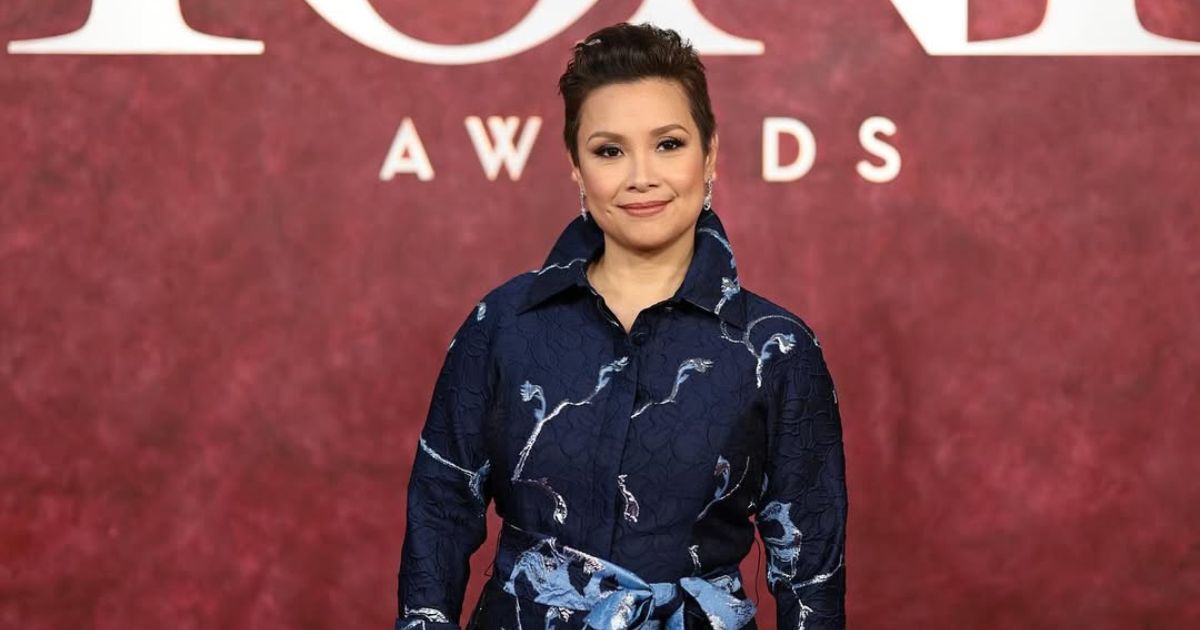
Lea Salonga receives her star on the Hollywood Walk of Fame on Thursday, September 4, at 11:30 a.m., with Ming-Na Wen and Sibley Scoles on the program. The Hollywood Chamber of Commerce is billing her as the first Filipina to be honored on the Walk, and Walk of Fame producer Ana Martinez called the moment a milestone not only for Salonga but for the Filipino community and for generations of artists who will follow her.
She is right. It is also worth sitting with the arithmetic. Salonga won her Tony Award in 1991. The sidewalk caught up in 2026.
What Lea Salonga is being honored for
Salonga was cast as Kim in Miss Saigon at 18, out of an open call in Manila, after a childhood already spent onstage in the Philippines. She had made her professional debut at seven in The King and I. The West End production opened in 1989 and won her an Olivier. When the show transferred to Broadway in 1991, she won the Tony for Best Actress in a Musical at 20 years old.
Then came the part most Americans know without knowing it. Disney hired her to sing for Princess Jasmine in Aladdin in 1992, and again for Fa Mulan in 1998. Two of the most recognizable voices in the Disney canon belong to a Filipina from Manila, and for most of the 1990s that fact traveled almost entirely by word of mouth inside Filipino households.
She was also the first Asian actress to play Éponine in Les Misérables on Broadway, and returned to that show as Fantine in the 2006 revival. That detail matters more than a trivia line. Éponine is not written as Asian. Casting her was a decision someone had to make and defend.
Why the Miss Saigon question does not go away
Any honest accounting of Salonga's career runs straight into the show that made it. Miss Saigon is a Madama Butterfly retelling set during the fall of Saigon, built around a Vietnamese bar worker who falls for an American GI and dies so her mixed-race son can be raised in the United States. It is, structurally, the self-sacrificing Asian woman story that Asian American performers have spent the following three decades trying to escape.
The show also arrived with its own casting fight. Producer Cameron Mackintosh cast a white British actor in yellowface as the Engineer, a Eurasian pimp, and Actors' Equity initially refused to allow the transfer before reversing itself under pressure. That fight is one of the founding conflicts of modern Asian American theater advocacy, and it happened around the production that launched Salonga.
None of that is a mark against her. She was 18, she was extraordinary, and she took the only door that was open. The point is that the door itself was the problem. An industry that would not write an Asian lead outside of a war-and-sacrifice frame produced exactly one internationally famous Filipina musical theater star, and then took another 35 years to put her name in concrete.
How rare is a Filipino star on the Walk of Fame?
The Walk of Fame has more than 2,800 stars. The Hollywood Chamber's own statement identifies Salonga as the first Filipina honoree, which means that across roughly seven decades of sidewalk induction, a community of more than four million people in the United States is only now getting a name of its own on Hollywood Boulevard.
That gap is not an accident of taste. It is a function of who gets cast, who gets nominated, who gets the campaign budget, and who gets nominated for the Walk in the first place. Stars are not awarded. They are applied for, by a sponsor who pays a sponsorship fee that runs well into five figures, and then approved by a selection committee. The process quietly favors performers with a studio, a label, or a well-funded fan campaign behind them. Filipino American performers have historically had none of the three.
What the ceremony is really measuring
Salonga has spent the years since Miss Saigon doing the thing that actually changes an industry, which is showing up repeatedly at a level nobody can dismiss. Concert tours. Judging on Philippine television. Erzulie in the Broadway revival of Once On This Island. Returns in Allegiance and Here Lies Love, both of which put Asian and Asian American stories at the center rather than at the margins of somebody else's war.
That second act is the part worth celebrating on September 4. Not the ingénue who broke through, but the veteran who kept working long enough for the institutions to run out of excuses.
Filipino American performers coming up now have a different map. Olivia Rodrigo is one of the biggest pop stars on earth. SB19 played Lollapalooza's main stages this summer. Alex Eala won a WTA title in Washington in front of a Fil-Am crowd that turned a hard court into a home match. None of them had to be Kim first.
What a star is worth
It is fair to be a little cynical about the Walk of Fame. It is a tourist attraction run by a chamber of commerce, the stars are paid for, and the sidewalk contains plenty of names nobody could place. Treating it as a referendum on artistic merit would be silly.
But it functions as a public record of who Hollywood decided was worth remembering, and that record is read by people who have never seen a Broadway show. A Filipino family walking Hollywood Boulevard in 2027 will find a name they know. That is not nothing, and for a community whose contributions to American entertainment have been steady and largely uncredited, it is more than not nothing.
The Walk is also, quietly, one of the few honors in this industry that anyone can nominate for. That matters. It means the absence of Filipino names was never a gatekeeping problem alone. It was also a question of who knew the process existed and who had the sponsorship money to complete it.
If you want to be there
The ceremony is free and open to the public, as Walk of Fame unveilings are, and takes place the morning of September 4 on Hollywood Boulevard. The Hollywood Chamber typically streams the event on its own channels for anyone who cannot make it to the sidewalk.
Go if you can. Then think about the number 35, and about which performer working right now is going to be waiting that long.