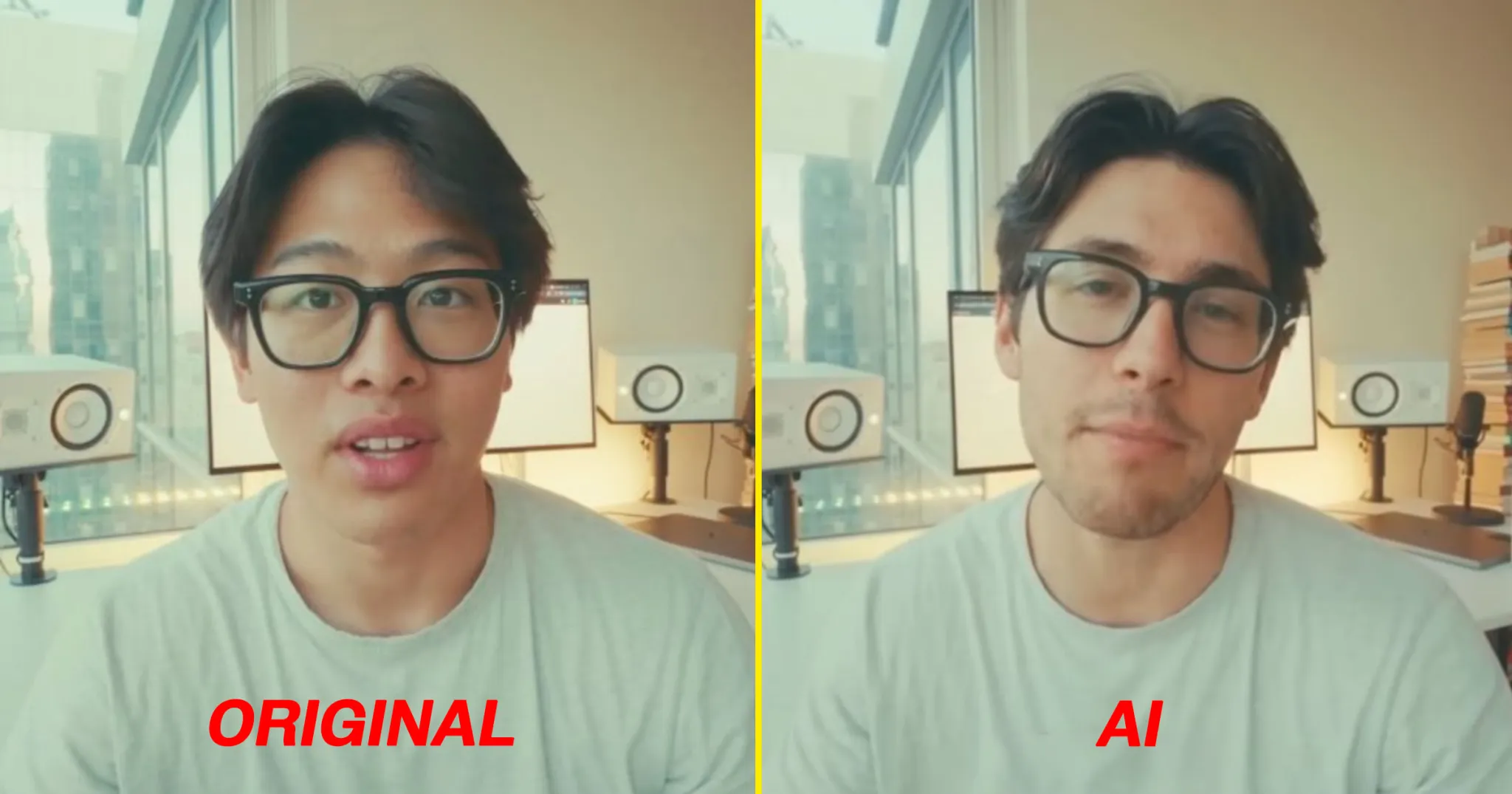
On September 23, YouTube served creator Elliot Choy an ad for Kalshi, the prediction market company, that showed him something strange: his own video. It was his apartment hunting video from September 2025, recreated as a Kalshi ad, except the man on screen was not him. It was an AI generated white man. "I guess Kalshi saw this and thought they should steal my video, turn me into a white dude, and run it as an ad," Choy posted.
He was not the first. Pushpek Sidhu, a Toronto based creator, had found a Kalshi ad in June that recreated one of his World Cup videos almost word for word, again with a white man in his place, and again without payment or credit, according to reporting compiled by AsAmNews.
What did Kalshi say?
A Kalshi representative told NPR's Bobby Allyn that the ad was old, that the company no longer runs AI generated ads depicting people, and that it is "reviewing our relationship with" the outside agency that made it, according to Futurism. Kalshi has not named the agency.
That answer puts the blame one step removed, which is common in advertising. It also leaves the central questions open. How many other creators' videos were used this way, who approved the creative, and whether the creators will be paid.
Sidhu's response to the lack of payment was blunt. "They could easily pay me a little bit," he said, as reported by AsAmNews.
Why swapping the face matters
There are two problems here, and they are worth separating.
The first is taking the work. A creator's video is a performance, a script, a format and a point of view, built over years of figuring out what an audience responds to. Recreating it scene for scene for a paid ad without a license is the kind of thing creators, lawyers and platforms have argued about for as long as there have been creators. Startup Fortune noted that the situation raises copyright and right of publicity questions, which let people control commercial use of their name and likeness.
The second is what the AI was used for. Whoever made these ads did not just copy a video. They kept the performance and replaced the Asian man delivering it with a white man. Whatever the intent, the effect is a decision that the idea was worth using and the person who created it was not worth showing.
That is whitewashing in its most literal form. It echoes a long history in American advertising and media of Asian faces being treated as niche and white faces as default. It is also not an isolated case this month. In the same week, Stanford University apologized after AI was used to alter a campus photo, replacing a Latino student and changing an Asian American student's appearance.
What this means for creators
For Asian American creators, and every creator, the lesson is practical. Your content can be scraped and rebuilt in ways that are hard to spot, and you may only find out by accident, the way Choy and Sidhu did, when the ad shows up in your own feed.
It is worth knowing what protections exist where you live. Many US states recognize a right of publicity, and California has moved to tighten rules around digital replicas of performers. Copyright covers the creative work itself. None of that is a substitute for a lawyer, but creators who know their rights are better placed to push back quickly.
What brands and agencies should take from it
A disclosure: 88tumble also runs a creator partnership business that connects brands with Asian American creators. We have a direct interest in how this plays out, and we think the lesson for brands is clear.
A brand's name is on the ad, whoever produced it. "An outside agency made it" does not protect a brand's reputation once creators and their audiences find out. The practical steps are not complicated:
- Put it in the contract. Agency agreements should explicitly ban using real people's content or likeness without a signed license, and should require disclosure of any AI generated people in creative.
- Pay creators for what you use. If a creator's format is worth copying, it is worth licensing. Sidhu's point stands.
- Review AI creative for who it erases. A final check should ask not just whether an ad is legal, but whose face was changed and why.
The creator economy runs on trust between people and their audiences. Brands that treat creators as raw material to be reshaped will eventually find that the audience notices.
What to watch
Whether Kalshi names the agency, whether it compensates Choy and Sidhu, and whether other creators come forward with similar ads. Kalshi's influencer marketing practices were already under scrutiny, with Startup Fortune reporting that the National Advertising Division had referred the company to the Federal Trade Commission. This episode adds to that record.
For Asian American creators, the story has already landed. A company wanted their work badly enough to copy it, and not badly enough to show their faces.