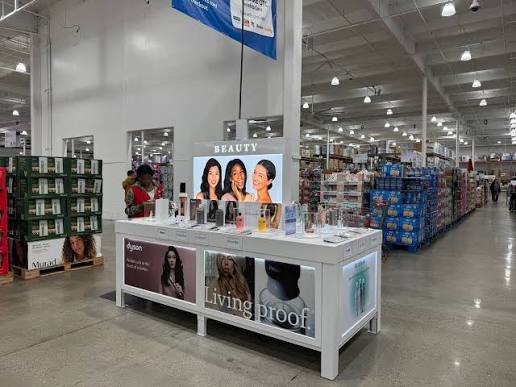
Costco Prestige Beauty Tables Include Two K-Beauty Brands

Costco is testing dedicated prestige beauty tables in 25 of its nearly 700 US warehouses, and two K-beauty brands, Rejuran and Re:nk, are among the names on them. Beauty Independent reported the test on Nov. 9. The tables use enhanced lighting and informational cards that explain product benefits, a browsing setup borrowed from specialty beauty and department stores, and the report says they appear timed for the holiday shopping season.
What are Costco's prestige beauty tables?
Quick answer: According to Beauty Independent, they are dedicated beauty discovery tables in about 25 Costco warehouses, built to let members browse higher-end brands the way they would at a specialty beauty retailer. The participating brands span several categories and include Tula Skincare, First Aid Beauty, Stila Cosmetics, IT Cosmetics, Kiehl's, Grande Cosmetics, Living Proof, Shark, Dyson, Rejuran and Re:nk.
Costco is not new to prestige. The report says it already carries La Mer, Shiseido, Armani, Maison Margiela, SK-II, Bobbi Brown, Anastasia Beverly Hills, Laura Mercier and Perricone MD, and that value sets and exclusive products are how it gives members a price break on them. What is new is the setting. Matt Goldbloom, founder and CEO of the off-price retail consultancy Common Shelf, is quoted in the report saying the notable part is the browsing environment, not the assortment: "Prestige beauty is a category people shop slowly, and a pallet doesn't let you do that."
Which K-beauty brands are on the tables?
The report names two, Rejuran and Re:nk. Rejuran touts itself as South Korea's No. 1 PDRN brand, a claim 88tumble has not verified, and it is offering a Costco-exclusive Turnover Ampoule set with a full-size 50 ml bottle plus an extra 10 ml bottle. The report prints no price for that set. It does print one price from the tables: Re's Celestial Collagen Cream, which typically retails for $120 to $130, is $48.99 at Costco. The report does not say whether Re is the same brand it lists as Re:nk, so 88tumble is not treating them as one.
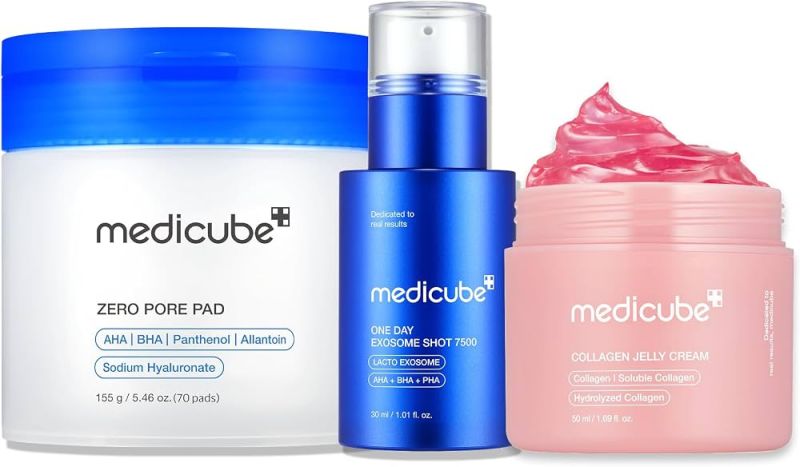
The tables sit inside a wider push. Per the report, Costco's website carries more than 50 K-beauty brands. Mixsoon has expanded into approximately 500 US warehouses, the report names Medicube and Goodal among the brands joining Costco's assortment, and Japanese haircare brand Honeyque made its Costco debut this year. In Costco's fiscal fourth quarter, the report adds, health and beauty was among the strongest nonfood categories, with K-beauty collagen masks and lotions resonating with members.
Why is Costco chasing prestige beauty now?
The report's short answer is higher-income shoppers. Costco joins CVS, Target, Walmart and other mass retailers in seeking a larger share of those households' beauty spending. NielsenIQ data cited by Beauty Independent shows beauty and personal care spending among households earning at least $100,000 rose 18.2% in 2025, against 5.9% for middle-income households and 0.9% for households earning less than $50,000. Circana puts prestige beauty sales at $17.1 billion in the first half of 2026, up 7%, the same pace as mass beauty. The report frames the split as part of a K-shaped economy, where spending at the top and bottom of the income ladder is pulling apart.
Costco's membership base is built for that bet, according to the report. Members had a median household income of approximately $128,000 as of 2023. Costco ended fiscal 2026 with 84.1 million paid members worldwide and a US and Canada renewal rate of 92.3%. Brett Chukerman, founder and CEO of the fractional beauty retail firm Shelf Rights, says the advantage is a shopper base with higher income than most retailers see.
Goldbloom's read is that the economics are not the point. Costco's beauty business, he says, "doesn't have to earn its margin, it has to earn the renewal," which lets it treat prestige "as a membership benefit rather than a P&L line." That is the structure under the tables. In his telling, the table is there to help members justify renewing, and its own margin is secondary.
Can prestige beauty tables work at Costco's scale?
Not everyone quoted is sure. David Klar, CEO of beauty brand developer and distributor Klar & Co., is skeptical the tables can work at scale. He argues the concept suits select warehouses serving affluent, beauty-savvy shoppers and could use a more cohesive assortment: "A $25 mascara set next to a $600 prestige item is likely attracting very different customers, yet in this set it's part of one general experience."
The report also lays out the risk for brands. Wider prestige distribution at mass retailers can lift sales, but it can strain relationships with existing retail partners, undermine the exclusivity that defines prestige, and intensify pricing pressure. Goldbloom puts it bluntly: "the more places a prestige brand appears, the less prestige it has." NIQ's Jacqueline Flam Stokes, managing director of beauty and health, argues from the other side in a LinkedIn post the report quotes: "The real question isn't whether mass retailers are able to sell prestige beauty. It's whether prestige beauty brands can afford to ignore where consumers are shopping."
Do the tables reach Asian American shoppers?
The Beauty Independent report does not say. It calls Rejuran and Re:nk K-beauty brands, describes Honeyque as Japanese, and never mentions Asian American shoppers. Any link has to come from other data, and this section is context, not a finding of the report. In 88tumble's earlier coverage of Numerator data, club stores took 24 percent of Asian consumers' CPG spend, more than twice the share among all shoppers. That coverage noted it had no stated methodology or survey period, so treat the figure as directional, and it is a CPG figure, not a beauty-specific one. What the Costco report can tell you is where Asian beauty brands are being shelved. It does not tell you who is buying them.
What should Asian beauty brands weigh before pitching club retail?
This section is 88tumble's reading of the report, not reporting from it. The Rejuran set fits the pattern the report describes, where value sets and exclusive products are how Costco gives members a price break. What neither example answers is how a brand gets a spot. The report does not say how Costco picks brands, what terms apply, or whether placement is paid, so a brand weighing this has questions to take to Costco directly, not conclusions to take from this test. The dilution risk the report describes applies to Asian beauty brands as much as any other.
What does the Costco beauty report not say?
As 88tumble read it, Beauty Independent's report does not say how Costco selects brands for the tables, what terms apply, whether placement is paid, which 25 warehouses are in the test, how long it will run, or how it is performing. It gives no price for the Rejuran set. The NielsenIQ and Circana figures reach us secondhand through the report, and 88tumble worked from this one report and has not confirmed the test with Costco. Check Costco's own statements and the brands' announcements before you plan around any of it.
Source: Beauty Independent, Nov. 9, 2026.