Nongshim Tariff Refund Lawsuit: What Food Importers Should Know

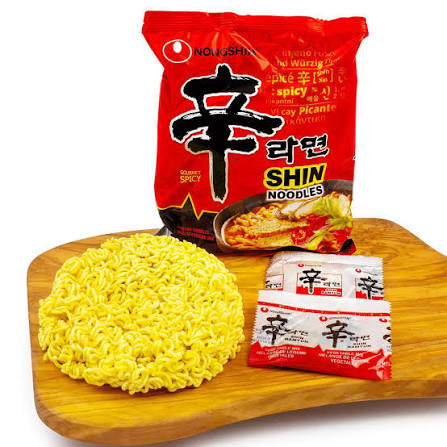
Nongshim's US subsidiary has filed a tariff refund lawsuit against the US government, asking the US Court of International Trade for money the regular refund process has not returned. Korean press dates the filing to Oct. 28. The case shows how differently Korean food companies are handling the same pot of tariff money: Daesang, Pulmuone and Ottogi have finished their refunds without suing, while Nongshim is going to court over a slice tied to import entries that customs had already finalized. Here is what two Korean reports say, where they disagree, and what other food importers can take from them.
What is the Nongshim tariff refund lawsuit?
Quick answer: According to ZDNet Korea, Nongshim's US subsidiary sued the US government, US Customs and Border Protection (CBP) and others in the Court of International Trade on Oct. 28. It wants the unrefunded part of tariffs it paid under IEEPA, the International Emergency Economic Powers Act, on shipments to the US from April 2025 through February 2026. ZDNet Korea puts the tariffs on those shipments at about 4 billion won in total, and says most of that has been refunded. The part still outstanding is about $70,000, or about 93.71 million won, tied to some entries that customs has already finalized.
The US government has until Dec. 28 to file its answer, ZDNet Korea reports. An English copy of an earlier Maeil Business report on the StockHub site, published Nov. 2, describes the suit a little differently. Its AI-assisted summary says the case also names the CBP commissioner, seeks a full refund of the IEEPA tariffs with interest, and asks for recalculation of finalized imports. It adds that no order has been issued in the case yet. StockHub warns that its content may contain errors, and only that summary was available to 88tumble, not the full Maeil Business article.
Why would Nongshim sue if tariff refunds are already flowing?
The short answer, per ZDNet Korea, is that finalized entries sit outside the general refund. In February, the US Supreme Court ruled that IEEPA does not give the president independent authority to impose tariffs. The government then stopped collecting the duties and set up a refund procedure. CBP's electronic refund system, called CAPE, started on April 20. Its first wave covered entries whose duties were not yet finalized, along with entries not yet past a certain period after settlement. Entries that had already cleared the final settlement step, which customs calls liquidation, were left out of the general refund.
ZDNet Korea says that leaves a gap, and that a separate lawsuit is needed to establish a right to a refund on finalized entries. The government has objected to a bulk refund order covering those entries, and the dispute over scope continues. Since October, the report says, CBP has begun refunding finalized entries for some importers under court orders to re-liquidate them. The StockHub summary adds two figures. It says duties are finalized about 10 months after customs clearance, and that imports finalized more than 80 days ago need a court order for recalculation. Because that detail comes from an AI-assisted summary, treat it as a lead to confirm, not a deadline to plan around.
How are other Korean food companies handling tariff refunds?
ZDNet Korea's roundup shows no single path. Daesang, Pulmuone and Ottogi completed refunds without a separate lawsuit. A Pulmuone spokesperson told the outlet the company has already been refunded and is not considering a lawsuit or any separate procedure; it did not disclose an amount. LG Household & Health Care has reportedly received refunds of tariffs it paid earlier, though the report cites no company statement and gives no amount. Samyang Foods is watching the situation, and the report says the scale and progress of its refund have not been confirmed.
CJ CheilJedang sits at the other end. ZDNet Korea reports that its business centers on US local production, that an internal check found the tariff impact was not large, and that it has not moved toward a refund lawsuit. An unnamed food-industry official told the outlet that companies with a high share of US production were less affected than export-focused ones, but could not avoid the burden entirely.
Where do the two reports not line up?
The sources conflict in places, and readers should know where. On size, ZDNet Korea says roughly $70,000 is unrefunded and is what the suit targets, while the StockHub summary says Nongshim has not disclosed its claim amount. The two also describe the relief differently: the unrefunded remainder on finalized entries in one, a full refund with interest plus recalculation in the other. Maeil Business's headline, as reproduced by StockHub, calls this the first lawsuit in the food industry, a claim ZDNet Korea does not make. 88tumble has not reviewed the court docket, so none of these figures has been checked against the filing.
What should food importers check?
None of this is legal or tax advice, and neither report tells importers which route to take. Reading the mechanics they describe, though, a brand that paid IEEPA tariffs can bring a short list of questions to its customs broker or attorney. Are the entries still open or already finalized? Has a refund come through CBP's electronic system? If entries are finalized, is a court order the only route, as the reports suggest? And how much of the product is made in the US rather than shipped in, since CJ's account suggests local production shrank its exposure?
Two things to watch next: whether the court issues an order in Nongshim's case after the government's Dec. 28 answer, and whether Samyang Foods or others decide to follow Nongshim into court. For more on how Asian food and consumer brands are faring at US retail, see our coverage of Asian shoppers reshaping CPG spending.