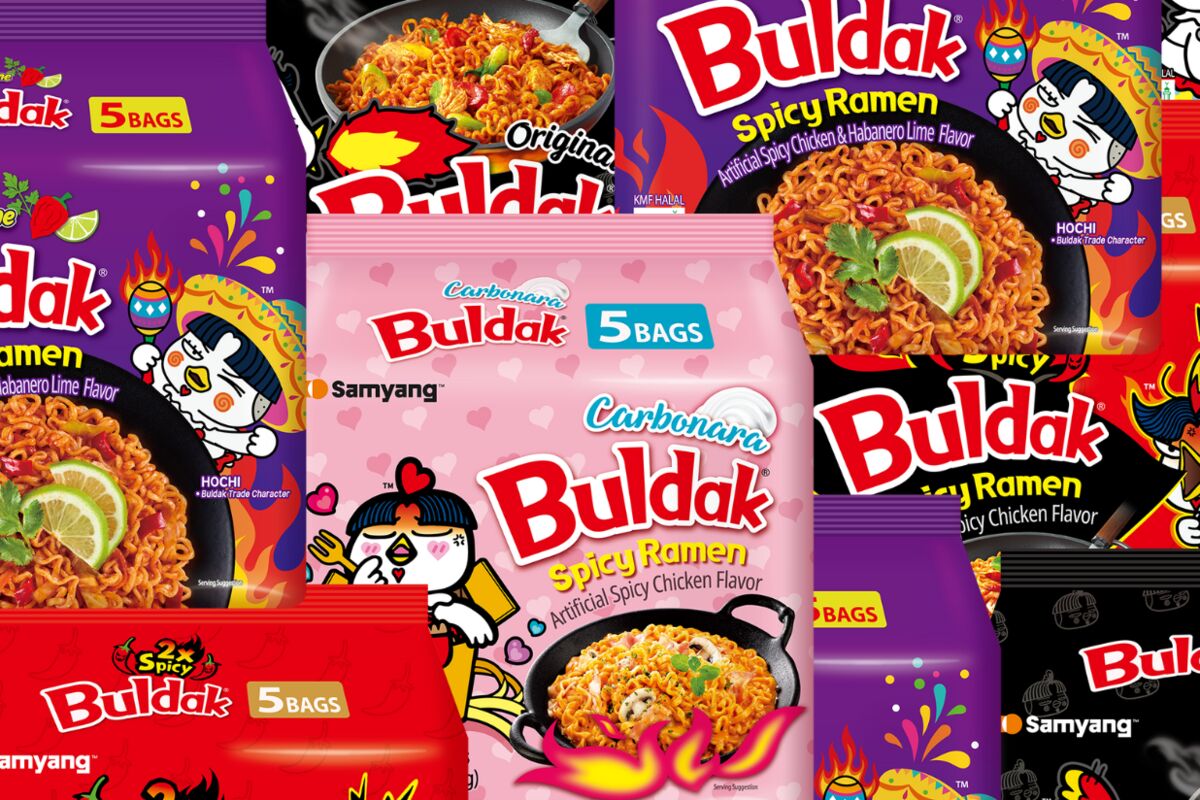
Samyang Buldak US Ramen Push: $419 Million, Eyes No. 1

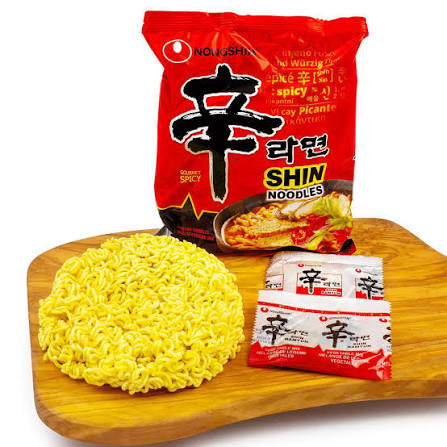
Samyang America, the US arm of Korea's Samyang Foods, brought in $419 million in 2025, its CEO told Korean outlets, and a November report says its head wants the No. 1 spot in US ramen. That is the picture from four Korean press reports on the company's Buldak noodles, which describe a brand sold in about 30,000 US locations and name Costco, Walmart, Target and Amazon among its sellers. Here is what the reports say about the Samyang Buldak US ramen push, where they do not line up, and what a brand weighing its own US entry can take from them.
This piece sticks to four pages: a Korea Herald interview and a Korea Times interview, both from May 6, 2026, a Korea Times report on the Tangle pasta brand from Sept. 4, and a MoneyToday English edition report from Nov. 5. MoneyToday says its English text is an AI translation, and the May pieces are interviews with Samyang America's own CEO, so their figures are the company's.
How big is Samyang's US business?
Quick answer: About $419 million a year, by the company's account. Both May reports give $419 million for 2025, the Korea Herald as revenue and the Korea Times as sales. The Herald's subhead says the CEO "grows sales eightfold to over $400 million in three years," which is the Herald's wording, not ours. CEO Shin Yong-sik (the Korea Times body spells it Shin Young-sik) told the Herald that annual revenue stood at approximately $50 million when he joined in early 2023.
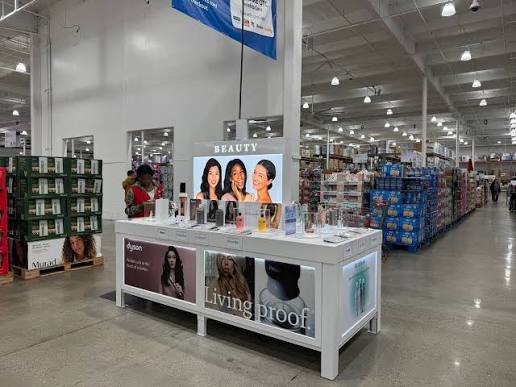
The interviews also describe a retail footprint that grew from 15,000 locations in 2023 to 30,000 in 2025, including Walmart, Costco, Target and Amazon, and a team that grew from 18 employees to roughly 100. MoneyToday gives a separate series in won for Samyang America, which it says was established in August 2021: 63 billion won in 2022, 159.6 billion in 2023, 378.6 billion in 2024 and 595.2 billion "last year."
Where do the reports not line up?
The May interviews give $419 million for 2025, MoneyToday gives 595.2 billion won for last year, and no page states an exchange rate or says the two are the same measure, so we print both and do not convert. The starting point is unclear too. The Korea Times puts $50 million in 2023, while MoneyToday's won series has 2023 at 159.6 billion. We cannot tell whether $50 million is a 2022 run rate or a 2023 figure, so we read "eightfold" as a headline, not a measured multiple.
The location count shifts with the word used. The Herald says about 30,000 stores and quotes Shin on 30,000 retail doors, while the Korea Times quotes him on 30,000 retailers. Stores, doors and retailers are different units, and no page says how many are Walmart, Costco or Target. The May pieces also describe the 2024 Numerator ranking differently: most favored brand among Generation Alpha (Herald), or top of a survey of popular brands among young consumers (Korea Times).
How is Samyang marketing Buldak in the US?
Around young consumers and what they already do with the product. In the Korea Times interview, Shin says the company respects how young consumers reinterpret and share the brand, and lets it grow in their cultural context instead of trying to control it. He also says the core of Buldak is its flavor identity: "The moment we dilute that identity, Buldak becomes just another ramyeon on the shelf." The Herald quotes him saying Gen Z and Gen Alpha treat Buldak as an experience, and points to the Buldak Challenge, in which people push their limits and share the moment on social media.
Both interviews tell one story the same way. A video of a young girl crying over a Buldak Carbonara birthday gift passed 100 million views, and Samyang visited the family in person instead of issuing a press release. MoneyToday's piece, in its AI translation, quotes Shin on selling Buldak as stress relief and an escape from routine, and on the need for more products that combine Buldak with other foods so more consumers encounter the brand.
What is Samyang planning next?
MoneyToday reports Shin setting a goal of No. 2 in the US ramen market within five years and No. 1 within ten, and its headline says Samyang is targeting the top spot. Because that report is machine translated, we paraphrase it, and the goal should be confirmed with Samyang or a Korean reader before anyone repeats it. The same report says Canada is due by the end of 2026 and Mexico in the first quarter of 2027, and that a jjajangmyeon style product called Jjarreureu is slated for the US the following year, which we read as 2027 from the report's date.
The Korea Times reported on Sept. 4 that global sales of Samyang's Tangle pasta rose 102 percent in the first half of the year, and that US sales rose 475 percent according to Samyang Foods. It says Walmart is set to expand Tangle to more than 1,600 stores and Target to more than 1,000 locations. The page prints no dollar figure, so the 475 percent has no base we can check.
What can brands entering the US take from this? Our read
Everything above comes from the pages. What follows is our judgment.
The first lesson is breadth. Taken together, the four pages name Costco, Walmart, Target, Albertsons, Kroger, Aldi, Five Below, Amazon and TikTok Shop, a mix of club, mass and online sellers by our grouping. The pages do not say how revenue splits by channel or in what order the placements came, so we would not treat the footprint as a template.
The second is that the marketing follows behavior that already exists. A brand without Samyang's volume should ask whether its own product already has a behavior to follow before it spends on inventing one. That is our reading of Shin's interviews, not a claim either outlet makes.
The third is to treat No. 1 as an ambition, not a position. No page gives a US ramen market size or a rank for Samyang, so we claim none. For more on how Asian American food brands win shelf space and then have to hold it, see our earlier piece, Asian American Food Brands Won Shelf Space. Keeping It Is Harder. None of the four pages describes Samyang's US shoppers, retailers or creators as Asian American, and we make no claim about that audience. We link it for the shelf-space question, not for the brand.
What the sources do not say
None of the four pages gives Samyang's share of the US ramen market, a market size, a profit figure, or a revenue split by retailer, channel or product. MoneyToday's English text is machine translated, so its won figures and the No. 1 goal should be read against the Korean original. Samyang's own filings and the Numerator survey were not opened. For anyone following the story, the practical next step is to ask Samyang America to confirm the 30,000 count and what it measures, and to confirm every figure with the company before repeating it.