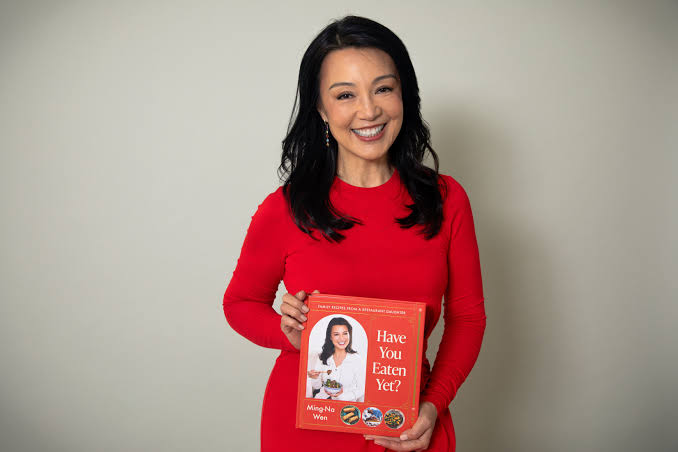
Ming-Na Wen's debut cookbook, Have You Eaten Yet?, came out October 6 from Simon Element, and it is not the celebrity cookbook you might expect. The subtitle tells you where it comes from: Family Recipes from a Restaurant Daughter. Before she was the voice of Mulan, Dr. Deb Chen on ER or Fennec Shand in The Mandalorian, Wen was a kid working in the Chinatown Inn, her family's restaurant in Pittsburgh. The book is built from that kitchen, and from a neighborhood that has almost entirely disappeared around it.
What is in Ming-Na Wen's cookbook?
The 256 page book, according to its publisher, mixes recipes with family stories, practical tips and never-before-seen family photos. It moves through restaurant classics from the Chinatown Inn, dishes for family feasts, and the food Wen cooks in her own home kitchen now, along with guidance on the basic techniques and ingredients behind them.
What stands out is the range. Wen told Joy Sauce that she "didn't want it to be just Chinese food; I wanted it to reflect an Asian American experience." So alongside the Chinese dishes, the book makes room for food like the prime rib her father cooked, the kind of thing a Chinese American restaurant family put on the table because that was also part of their lives.
According to AsAmNews, the book grew out of Wen's YouTube channel, where fans kept asking her to write down the recipes she cooked on camera. She has described it as part autobiography, a way to pass her family's traditions on to her own children.
A restaurant kid from Pittsburgh
Wen's route to Pittsburgh ran through three continents. She was born in Coloane, Macau, in 1963, moved with her family to Hong Kong and then to New York City when she was four. When she was nine, her mother and stepfather, Soo Lim Yee, moved the family to Pittsburgh and took over the Chinatown Inn, a restaurant that had been operating since 1943. She grew up in suburban Mt. Lebanon, studied theater at Carnegie Mellon University and graduated in 1986. Her first television role was on Mister Rogers' Neighborhood, filmed in the same city.
That is a very particular Asian American childhood. Restaurant kids grow up doing homework at a back table, folding napkins, answering phones and learning early that the family business is everyone's job. Food at home and food on the menu blur together. Plenty of 88tumble readers will recognize it immediately.
The last restaurant in Pittsburgh's Chinatown
The Chinatown Inn's address carries more history than most dining rooms. Pittsburgh once had a real Chinatown, a few blocks downtown on and between Grant Street, Second and Third Avenues, and Ross Street. At its height in the early 1920s, an estimated 500 people lived there, according to reporting by Pittsburgh public radio station WESA.
Then the city built the Boulevard of the Allies straight through it. Construction in the 1920s cut the neighborhood apart, and residents scattered to other parts of the city and the suburbs. WESA notes that county commissioner minutes about planning the boulevard do not mention Chinatown at all. By 1959, only about 30 people remained.
Today, in WESA's words, "only one restaurant marks where the neighborhood once stood: the Chinatown Inn on Third Avenue," with its pagoda-style entrance painted red and blue.
That gives Wen's cookbook a weight beyond nostalgia. Chinatowns across the country were cut down by highways, urban renewal and redevelopment in the twentieth century, and many survive only as a single building or a name on a sign. When a restaurant like the Chinatown Inn lasts, it is often because a family kept showing up to cook. Writing those recipes down is a way of keeping the neighborhood on the record, too.
The Chinese American restaurant as its own cuisine
The prime rib detail is the heart of the book's argument. Chinese American restaurants have always cooked for whoever walked in the door. They adapted to local tastes and local ingredients, and the families running them ate across that same line. Treating that mix as inauthentic misses what it is: a cuisine with its own history, made by people working out how to belong somewhere new.
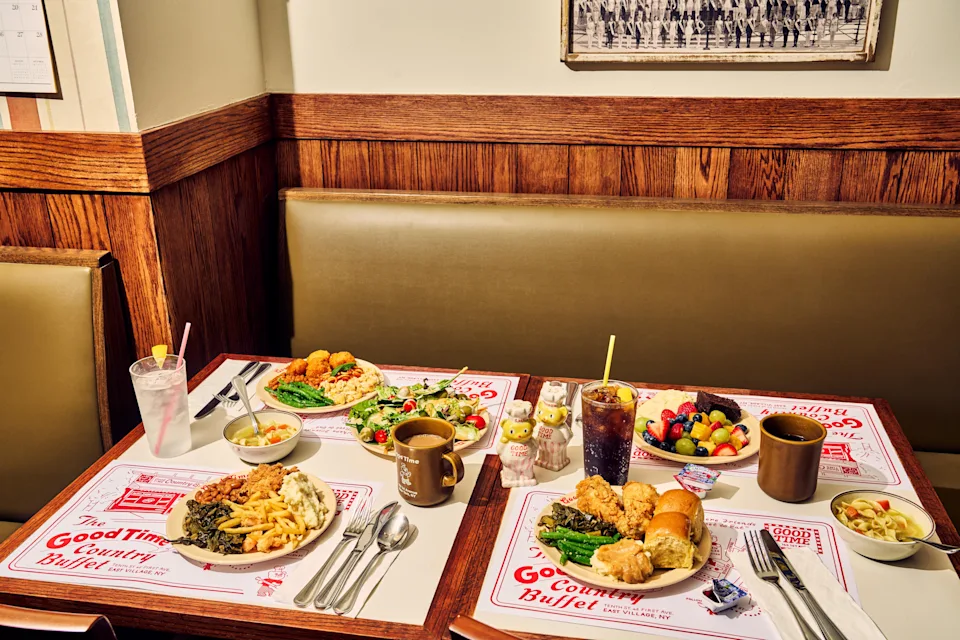
It is the same argument we made recently about Korean American restaurateurs bringing back the Southern buffet in New York. Asian American food history includes the dishes immigrant families learned to cook here, not only the ones they brought with them. Wen's book puts that history on the page under the name of a family restaurant that has outlasted the neighborhood around it.
Why the title matters
"Have you eaten yet?" is how many Chinese families say hello. It is a greeting, a check-in and an expression of love all at once, and anyone raised by Chinese parents has heard it at the door a thousand times. Putting it on the cover tells you who the book is for first: the people who grew up hearing it, and the children Wen is writing the recipes down for.
Have You Eaten Yet? Family Recipes from a Restaurant Daughter by Ming-Na Wen is out now from Simon Element.