Before anyone had seen a full episode, Netflix's adult animated comedy Dang! was already on trial. When the streamer posted promotional clips on Instagram in August, commenters accused the show of leaning on the most familiar Asian American tropes: strict immigrant parents, strained siblings, the pressure to assimilate. Then the series premiered on September 8, and the critical conversation that followed was about almost everything except that.
The gap between the two is worth looking at, because it says something about how Asian American work gets judged in 2026.
What is Dang! about?
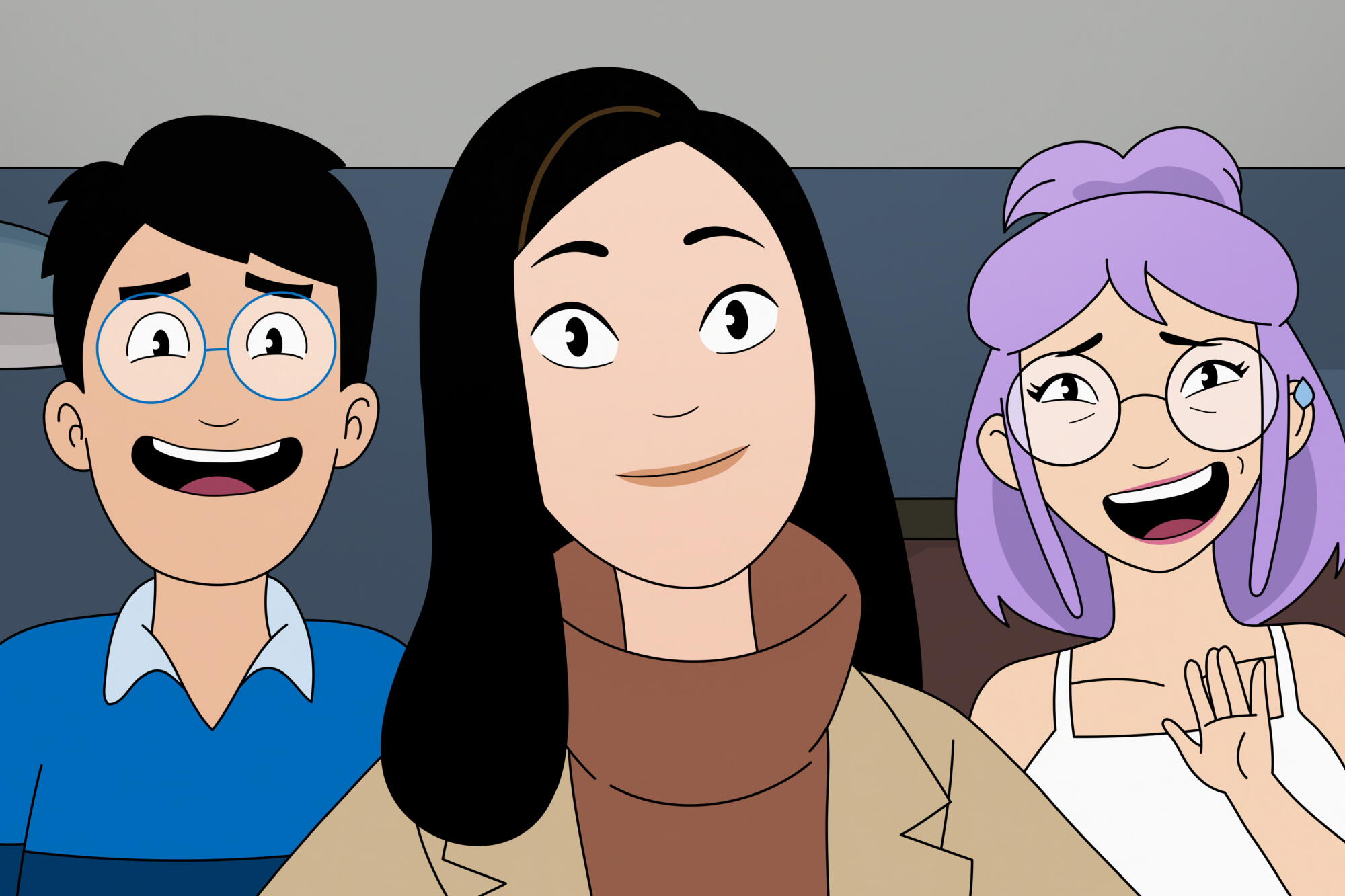
Dang! is an eight episode animated sitcom created by Andrew Law and Matt Murray and animated by Titmouse. It follows Andrew and Eunice Dang, two Asian American siblings living a chaotic, economically anxious life in New York City, until their high achieving older sister Ruthie, a lawyer, shows up pregnant and wants to join them. Law voices Andrew. Poppy Liu voices Eunice. Stephanie Hsu voices Ruthie.
The executive producers include Mike Schur and Alan Yang, and the show comes from Universal Television with Schur's Fremulon and 3 Arts Entertainment. Law, a writer on Hacks and The Good Place, has said he first wrote the pilot in 2018 as a live action script before it became an animated series. He has credited art director Otto Tang with marrying "the Western style of animation with some sort of anime influences."
What was the backlash?
The complaints in August were about the premise as marketed. A family story about Asian American siblings, an overachieving older sister and the shadow of immigrant parents read to some viewers as the same handful of story beats Asian American characters have been handed for decades. The criticism spread in comment sections and reposts, as these things do, well before the show was available to watch.
That reaction did not come from nowhere. Asian American audiences have spent years watching studios reduce their families to tiger parents and model minority pressure, and a short promo clip gives very little to go on. Suspicion is a reasonable default after that history.
What critics said once it premiered
The reviews, when they came, were mixed, and mostly about craft. Variety called the show enjoyably chaotic. Ready Steady Cut found it "an earnest, genuinely good time," sharpest when it skewers its characters' own contradictions, noting that "none of the three characters recognize the ironies embedded in their worldviews, which makes for sharp comedy," while adding that viewers over 45 may not find much in it. The Hollywood Reporter judged it inconsistently amusing. NME's Matt Maytum was harder on it, calling the characters one note and the humor "more exhausting than amusing" despite strong animation.
What stands out is what the reviews did not say. The critics who disliked Dang! mostly disliked it for being uneven or thin, the ordinary ways a sitcom can miss. The stereotype charge that dominated the pre-release chatter barely registered in the major reviews. In Ready Steady Cut's reading, the show is less interested in immigrant parents than in its three siblings, and its sharpest jokes land on millennial and Gen Z habits: economic anxiety, conflict avoidance, the hypocrisies of online politics.
Whether it succeeds at that is a fair argument. It is a different argument from the one that played out in August.
The cost of judging a trailer
This cycle has become familiar. A studio releases a trailer or a still for a project built around Asian American characters. Before the work exists for audiences, it is sorted into representation good or representation bad, and the verdict travels faster than the show.
The instinct behind it is protective. There are so few Asian American led series that each one feels like it has to carry the whole community's image. We made a version of that argument ourselves when CBS cast one Asian American lead in a show named after Cupertino, where the casting was a fact on the page rather than a guess from a trailer.
But the same scarcity that makes people protective also makes the early verdict costly. Asian American creators get very few chances at a series, and a show that gets branded as stereotypical in August may not get a second season to prove otherwise, whatever the episodes actually contain. Meanwhile, the family story in Dang!, a pregnant older sister arriving to upend her younger siblings' lives, is one plenty of Asian American viewers will recognize from their own lives. Family is not a stereotype. It is material. What matters is what a show does with it.
Is Dang! worth watching?
That depends on who you are. If you are in your twenties or thirties and live anywhere near the kind of chaos the Dang siblings do, Ready Steady Cut suggests you will find a lot to laugh at. If you want a sitcom with deep characters from episode one, the reviews suggest patience.
Either way, the only fair way to judge Dang! is the way it asked to be judged in the first place: by watching it. All eight episodes are streaming on Netflix now.