Forgotten Island, the DreamWorks Animation feature built from Philippine folklore, opened in the United States on September 25 to $12.8 million, good for fifth place, according to Cartoon Brew. Three days later it opened in the Philippines and posted 97.2 million pesos, the biggest opening for any DreamWorks Animation film in the country's history, ABS-CBN reported. The same movie, the same week, and two opposite verdicts.
That split is the most interesting box office story of the fall, and it lands just as Filipino American History Month begins.
What is Forgotten Island?
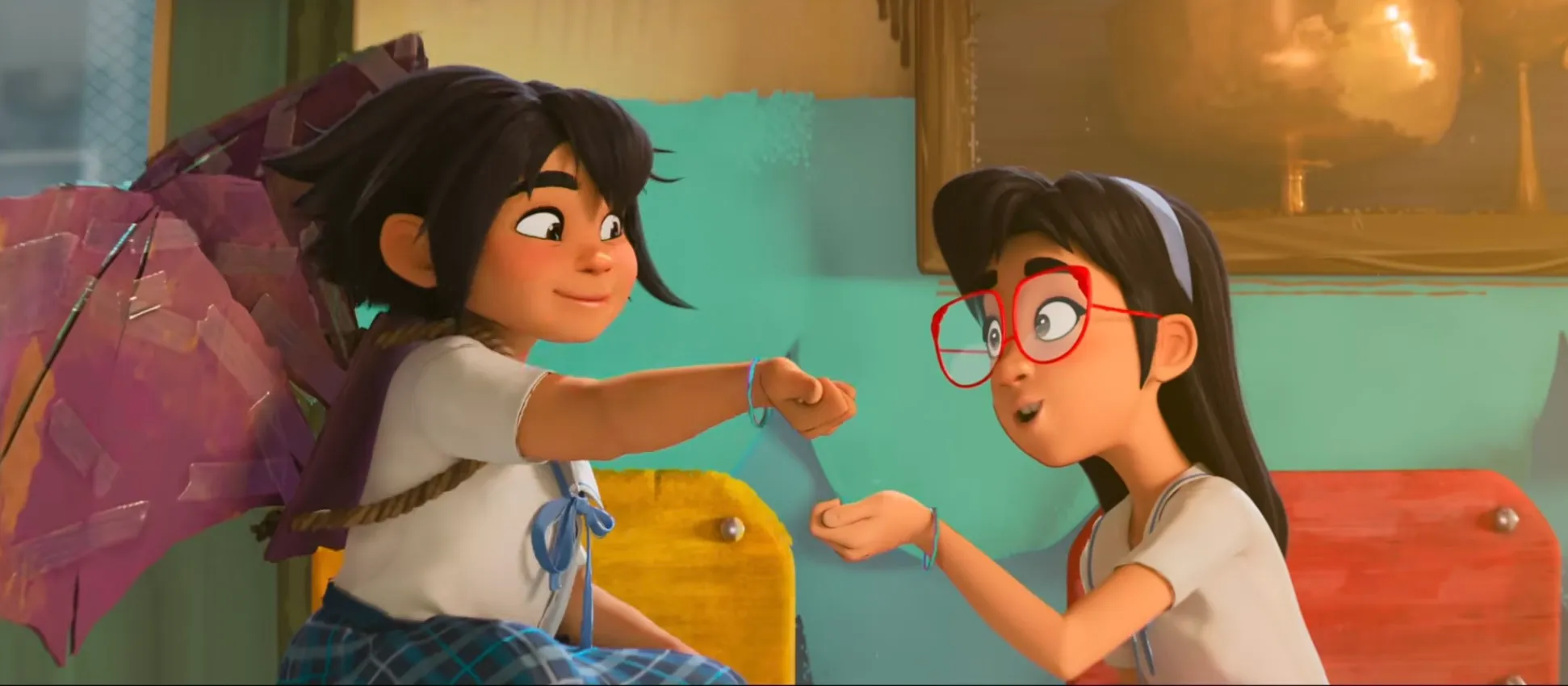
Forgotten Island follows two best friends who stumble into Nakali, a magical island drawn from Philippine mythology, after a night out. When they lose the enchanted sand dollar that opens the way home, they have to get it back, while one of them discovers she has inherited the wings of the island's villain. The creatures come straight from Filipino folklore: a manananggal, the duwende, a tree dwelling batibat.
H.E.R. voices the lead, Jo. Lea Salonga plays Manang, the manananggal villain. The cast also includes Liza Soberano, Dolly de Leon, Manny Jacinto, Ronny Chieng, Dave Franco and Jenny Slate. Joel Crawford and Januel Mercado, the Filipino American co-director, wrote and directed it. According to AsAmNews, the creative team traveled to the Philippines for research in 2025, and Mercado's relatives hosted a party for the crew as part of it.
Why did Forgotten Island underperform in the US?
It was not the reviews. The film earned an A CinemaScore and a critics score in the mid 90s on Rotten Tomatoes, with audiences rating it just as highly, according to Cartoon Brew. As that outlet put it, DreamWorks "doesn't appear to have a word-of-mouth problem; it has a getting-people-into-the-theater problem."
SlashFilm pointed to a few likely culprits. The film reportedly cost about $80 million to make. It opened in late September, a slot without the long holiday runway that helps family films build over weeks. It faced Primetime and Heart of the Beast on the same weekend. And it arrived during a stretch in which original animated films, from Pixar's Elio to Disney's Wish, have struggled against sequels and familiar brands.
There is a precedent worth watching. Crawford and Mercado also made Puss in Boots: The Last Wish, which opened to $12.4 million in December 2022 and went on to gross about $480 million worldwide. A slow start is not always the end of the story. But that film had a holiday season and a franchise name behind it, and this one has neither.
What does the Philippine record tell us?
In Manila, nobody needed to be told what a manananggal is. The villain, the creatures and the family dynamics of the film are part of a shared vocabulary there, and the cast is full of names Filipino audiences already follow, including Soberano, de Leon and Salonga, whose own career has long been a point of national pride. We covered that when Salonga received her star on the Hollywood Walk of Fame in September.
The film did not have to earn that audience's attention. It already had it.
In the United States, the same folklore is unfamiliar to most moviegoers, which puts the entire weight on marketing. A trailer has to explain a world that a Filipino viewer recognizes instantly. That is a harder sell, and the opening suggests it did not land.
The diaspora marketing problem
This is not a new pattern, but Forgotten Island makes it unusually visible. Studios increasingly greenlight stories rooted in specific Asian cultures, and then market them to a general audience as if the specificity were a hurdle to get past rather than the reason to buy a ticket.
Filipino Americans are one of the largest Asian American groups in the country, with deep community networks, churches, student organizations and media. A film like this one has a built in audience in the US too, one that could carry opening weekend if it were courted directly, early and in its own spaces. Whether DreamWorks did that at the scale the film needed is a fair question. The opening numbers suggest the answer is not enough.
The broader lesson reaches past one movie. If an acclaimed, culturally specific original gets called a flop after one weekend, the next pitch rooted in a non-Western tradition gets harder to make. That is how representation stalls. Not through a single rejection, but through a weak opening that becomes a data point.
What happens next
The film's second weekend, October 2 through 4, is the first real test of whether word of mouth can close the gap. Strong audience scores and the start of Filipino American History Month could both help it hold better than the typical animated release. The international rollout is still underway, and the Philippine opening shows there is real demand where the culture is familiar.
For Filipino American audiences, the choice is also a simple one. The studio made the movie. Whether the next one gets made depends in part on who shows up for this one.