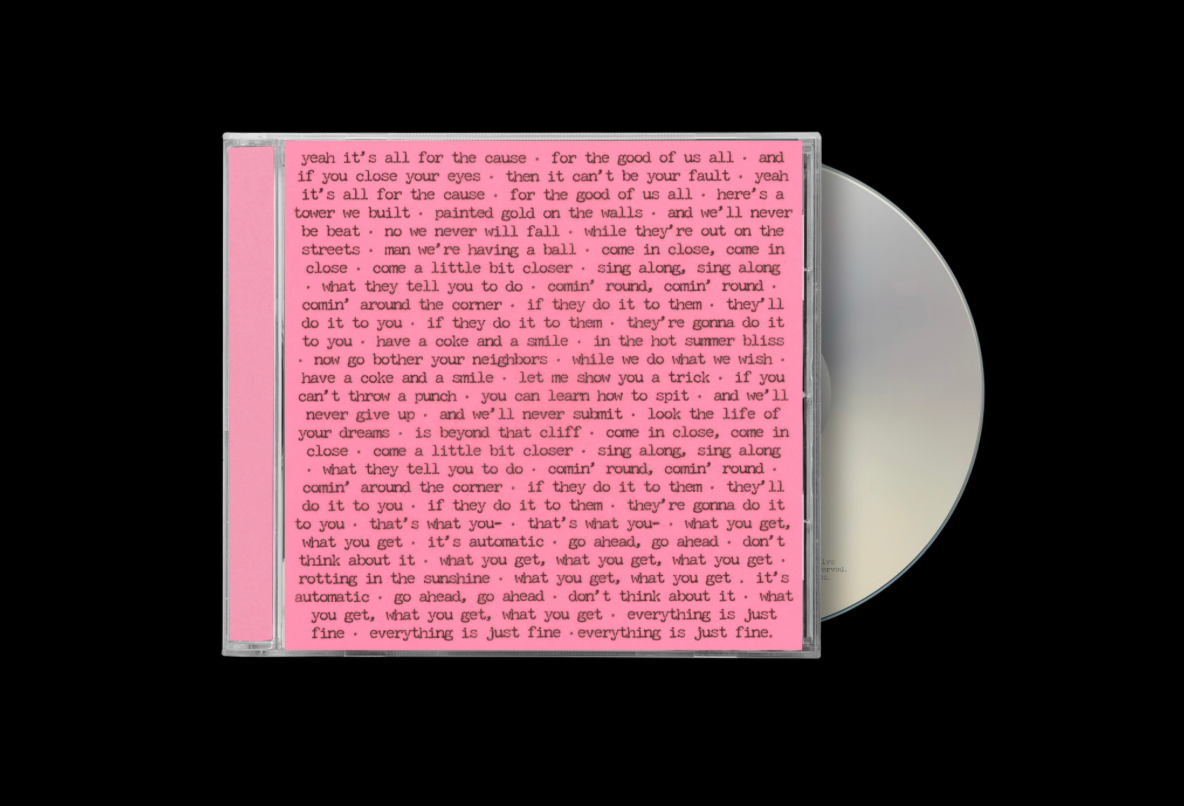
Olivia Rodrigo released "Serena Joy" on 500 CDs at one independent record shop in Tustin, California before it reached streaming services on August 24. The song takes its name and its posture from The Handmaid's Tale, it was cut from her third album for reasons of sequencing rather than quality, and the way she put it out is at least as interesting as the song itself.
Five hundred discs. One store in Orange County. Sold out fast. Then, three days later, the whole thing free to anyone with a phone.
What Serena Joy is and where it came from
By Rodrigo's own account in a radio interview this summer, she loves the track but left it off you seem pretty sad for a girl so in love because the album runs as a strict chronological narrative, the rise and fall of one relationship, and a song about Margaret Atwood's most compromised character does not fit inside that arc. Serena Joy Waterford is the woman in Gilead who helped build the machine and then got caught in it. She is not a victim in the clean sense and she is not a villain in the clean sense. She is complicity with a face.
That is a strange and specific thing for a pop star to write about at 23. It is also a departure. Rodrigo built a career on precise interior reporting, the sour details of a specific breakup at a specific age. "Serena Joy" points outward.
Why release it on CDs first
The physical drop is the part worth reading closely. A limited CD run at a single shop is a deliberately inefficient way to move a song. It cannot chart meaningfully. It cannot be streamed, clipped, or fed into a recommendation engine. What it can do is make 500 people drive to Tustin and stand in a line.
Artists at Rodrigo's level have been experimenting with scarcity for a few years now, but there is a difference between a numbered vinyl variant sold to inflate a first-week number and a political song handed to an independent retailer before the platforms get it. The second one says something about who she thinks the audience is.
The timing sat days before her headlining set at Daisy Chain Fields, an all-women festival, on August 29. Read together, the two moves are a single gesture.
The part the pop press keeps skipping
Rodrigo is Filipino American on her father's side, and the coverage of her career has handled that fact the way coverage usually handles it. One line in the first profile, a mention in the Filipino outlets, and then nothing. She has talked about her great-grandfather emigrating from the Philippines, about growing up in Temecula, about being the mixed-race kid who did not read as Filipino to anyone at school.
Whether that has anything to do with "Serena Joy" is not a question anyone should answer on her behalf. She has not framed the song that way and it would be cheap to do it for her.
What is fair to say is this. In a year when deportation policy is reaching deep into Asian American communities, the most commercially powerful Filipino American musician alive released a song about a woman who helped build an authoritarian state and then had to live in it. She did not put out a statement. She put out a record, at a record store, and let people decide what to do with it.
How this fits the wider Filipino American moment in music
The last two years have been unusually loud. SB19 played Lollapalooza on a bill where Asian acts were programmed as mainstream draws rather than a themed block. Head in the Clouds put KATSEYE at the top of its bill. Fil-Am artists are showing up in places that had no room for them a decade ago.
Rodrigo occupies a different position in that picture, because she never needed the diaspora infrastructure. She arrived through Disney and a Geffen deal and a song that broke streaming records. That is not a criticism. It is a structural fact, and it changes what her choices mean. When an artist with nothing to prove to the mainstream chooses an independent shop and a political character study, the choice reads as a choice.
What a scrapped song usually means
Worth being precise about the word. In the current release economy, a cut track is rarely abandoned. It is inventory. Artists at this level finish thirty or forty songs for a twelve-song album, and the remainder becomes deluxe editions, anniversary reissues, and surprise drops timed to keep a cycle alive between tours.
So "Serena Joy" being cut is not a story about a song that failed. It is a story about an artist who had a finished, pointed, politically legible track sitting in a folder and decided when and how to spend it.
She spent it in August of a midterm year, on a physical format, at an independent shop, days before headlining a festival built around women artists. Nothing about that sequence is accidental. Rodrigo's team is one of the more disciplined operations in pop, and the record of her career is that she does not do anything by accident.
The other thing to notice is what she did not do. There was no accompanying statement, no interview positioning it as a protest song, no fundraising tie-in. Compared to how most artists monetize a political moment, the restraint is conspicuous.
Where you can hear it
"Serena Joy" is on streaming platforms as of August 24. The CD is gone and is already moving on the secondary market at prices that have nothing to do with music.
Play it next to the album it was cut from. The break in tone is obvious, and it is the most interesting thing she has done this year.