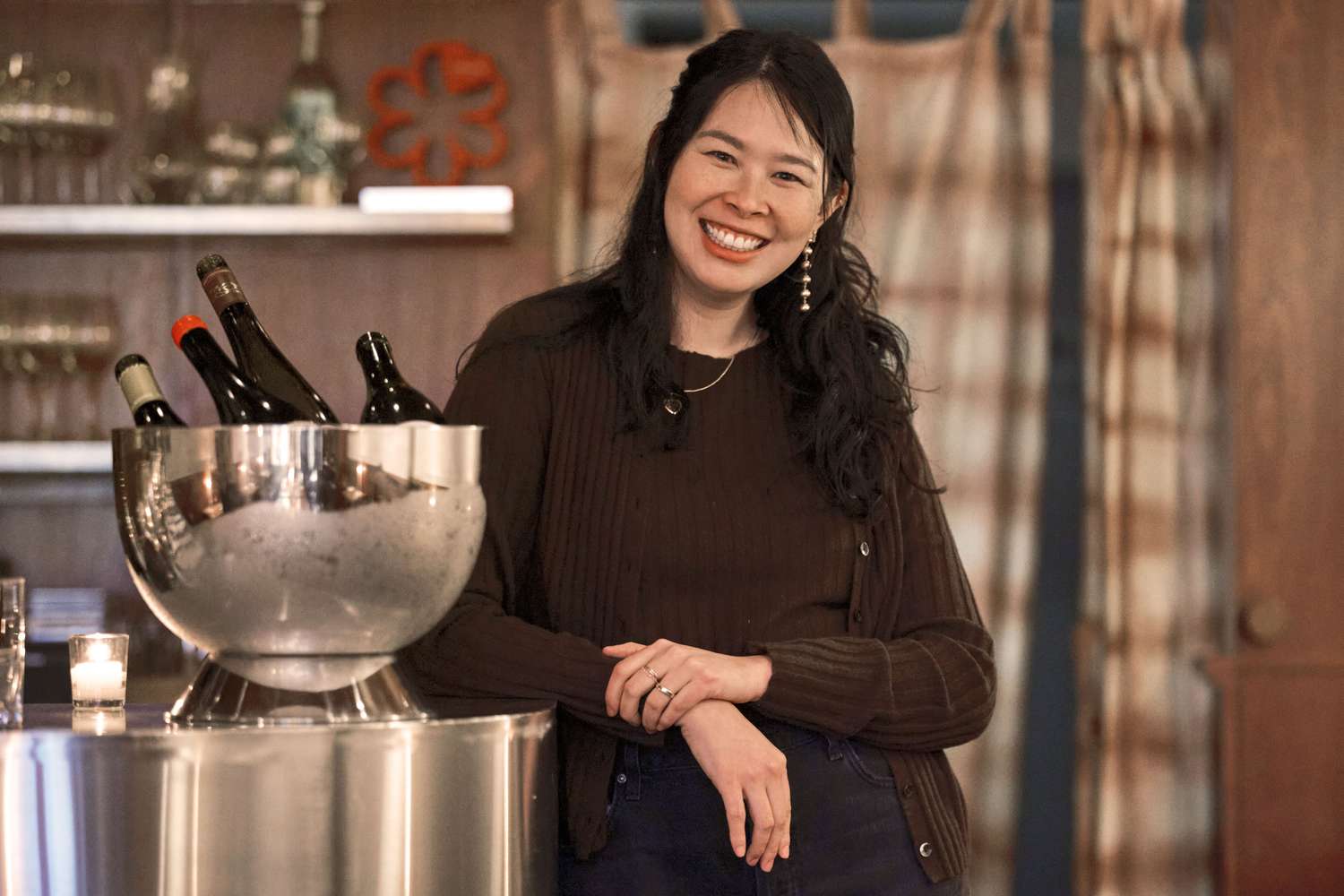
Lei, the 28 seat wine bar tucked into the bend of Doyers Street, won Best New Restaurant at the 2026 James Beard Awards, which means the most celebrated new restaurant in the United States this year sits on a hundred foot crooked alley in Manhattan's Chinatown. The James Beard Foundation announced the award on June 15. The block it landed on has been fighting for its life since 2020.
That is the part worth sitting with. Not the win itself, which is deserved by every account, but what a national award does to a street that spent four years watching its neighbors close.
What Lei is
Annie Shi opened Lei in June 2025. Shi is a partner in King in SoHo and Jupiter in Rockefeller Center, both restaurants built around a wine program with genuine point of view, and Lei applies that instinct to regional Chinese cooking. Patty Lee runs the kitchen.
The menu is small and specific. Chilled celtuce with kombu jelly. Cat's ear noodles with braised lamb. Sweet and sour beef short ribs. An eight treasure rice pudding finished tableside with sticky toffee sauce. The wine list is long, adventurous, and the reason a lot of people book.
The restaurant is named for Shi's late sister, Hannah Lei Shi, who died in the 2004 Indian Ocean tsunami.
Lei was not the only New York winner this year. Hooni Kim took Best Chef New York State for Meju, having earlier built Danji into the first Korean restaurant in America to earn a Michelin star. But Best New Restaurant is the category with the broadest reach, and it went to Chinatown.
Where is Doyers Street and why does it matter
Doyers is a short, sharply bent lane connecting Pell Street to Chatham Square, and its curve is the most photographed piece of geometry in Chinatown. The street carries a violent early twentieth century reputation from the tong conflicts, a history that has been repackaged for tourists often enough that residents are tired of hearing it. It also holds Nom Wah Tea Parlor, open since 1920, and a run of businesses that predate anyone's interest in the block as a destination.
What happened to Doyers after 2020 was not unique to Doyers, but it was concentrated there. Chinatown lost foot traffic before the rest of New York did, in early 2020, when avoidance of Chinese businesses ran ahead of any public health guidance. Restaurants that had operated for decades closed. The recovery has been uneven and is still incomplete.
A Best New Restaurant award does not undo that. What it does is redirect attention, and attention on this particular block is a complicated inheritance.
What a national award actually does to a Chinatown block
The optimistic version is straightforward. Lei fills its 28 seats, people who came for Lei walk past Nom Wah and the bakeries and the shops, and money that would have gone to Midtown stays downtown. Small restaurants in dense neighborhoods do generate spillover, and operators on the block have generally welcomed the visibility.
The other version is the one nobody in the industry likes discussing on the record. National recognition moves commercial rents. It moves them fastest in neighborhoods where the existing tenants have thin margins and short leases, which describes a great deal of Chinatown. The businesses least able to absorb a rent increase are frequently the ones that gave the neighborhood the character the award is implicitly celebrating.
We watched a version of this play out on the retail side when Kayla Wong moved Lang out of Chinatown Central Plaza to ROW DTLA, trading an ethnic enclave for a developer owned campus with better foot traffic. The tradeoff is real in both directions and it does not resolve cleanly.
None of this is a criticism of Lei, which is a small restaurant run by people with a serious connection to what they are cooking. It is a description of what recognition does to real estate, which is a force operating well above the level of any one operator.
Is Lei worth the reservation
The reviews since the win have been consistent that it holds up, which is not automatic for a restaurant carrying that much sudden expectation into a 28 seat room. Time Out's August visit found it lived up to the attention.
Practically, 28 seats against national demand means the reservation is the hard part, not the meal. Walk in odds early in the week are better than most people assume, and the bar is where the wine program is easiest to actually explore.
The larger pattern this fits
Asian American restaurants have spent a long time being read as either cheap or exotic, with very little space in between, and the institutions that confer legitimacy have been slow to update. Jon Yao winning Best Chef California for Kato earlier this year was one data point. Hooni Kim's Michelin star for Danji was another, years before it. Lei is a third, and the three of them together describe an actual shift rather than a run of individual achievements.
What is different about Lei is the format. Kato is a tasting menu. Danji made its case in a fine dining register. Lei is a wine bar, a category that has historically been the most European coded room in American dining, doing regional Chinese food without translating it into a French structure first. Winning Best New Restaurant in that format is a different argument than winning in the tasting menu category, and it is the more interesting one.
The building it happened in has been on that block a long time. It will be worth watching who else is still on the block in three years.