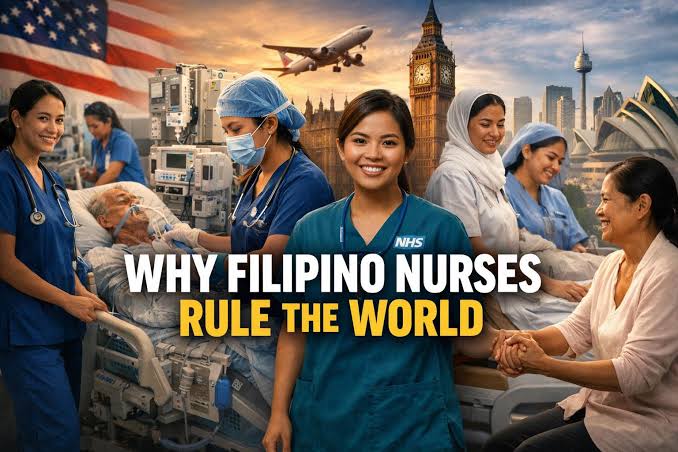
How Filipino Nurses Became the Backbone of U.S. Hospitals

Walk into almost any hospital in the United States and there is a good chance a Filipino nurse is on shift. Nurses trained in the Philippines make up about 4.5 percent of the registered nurse workforce in the U.S., roughly one in every 20 RNs, making the Philippines the largest source of foreign-born nurses in the country, according to research published in the journal Gender, Work and Organization. As Filipino American History Month comes to a close, it is worth understanding how that happened, and what it cost.
How did Filipino nurses become so central to American health care?
The story starts with American colonial rule. After the United States took control of the Philippines, it established nursing schools there in the early 1900s, beginning in 1907, that taught an Americanized curriculum in English, according to the same research. That created a workforce trained to American standards and fluent in English, long before most Americans knew it existed.
Historian Catherine Ceniza Choy documented this history in her book Empire of Care, tracing how colonial institutions laid the groundwork for a migration that would last more than a century.
The flow accelerated after the Immigration and Nationality Act of 1965, which created preferences for skilled workers. American hospitals facing chronic shortages recruited heavily from the Philippines. At the same time, starting in the 1970s, the Philippine government adopted policies encouraging labor export, and remittances from nurses and other overseas workers became a pillar of the national economy.
The cost during COVID-19
The pandemic exposed how much Filipino nurses carry. A National Nurses United report found that Filipino RNs accounted for 31.5 percent of COVID-19 deaths among registered nurses in the United States, despite making up about 4.5 percent of the RN workforce, according to the Gender, Work and Organization study.
The reasons were structural. Filipino nurses were heavily concentrated in hospital bedside care, intensive care units and long-term care facilities, where exposure was highest. Many worked extra shifts. Many lived in multigenerational households. And many felt they could not say no.
That number deserves to be remembered every October. It is one of the starkest measures of how much American health care depends on immigrant workers and how unevenly the risks fall.
Not just a job, a family strategy
For generations of Filipino families, nursing has been a ladder. Parents steered children toward nursing school because it offered a clear path abroad, a stable income and the ability to sponsor relatives. Entire extended families have been built around one nurse's visa.
That legacy shapes Filipino America today. In many communities, the nurse in the family is the one who brought everyone else over, paid for school back home and still sends money every month. The stereotype of the Filipino nurse can be flattening, but the reality behind it is a story of enormous labor and sacrifice.
The next chapter
The pipeline continues. American hospitals still face nursing shortages, and recruitment from the Philippines remains strong. At the same time, the Philippines itself faces shortages as so many trained nurses leave.
For second- and third-generation Filipino Americans, the relationship to nursing is changing. Some follow their parents into the field with pride. Others choose different paths precisely because their parents' sacrifices made that possible.
Why it belongs in Filipino American History Month
Filipino American History Month celebrates a history that runs from the first recorded Filipino landing in California in 1587 through the manongs who worked the fields and canneries to the nurses who staff American hospitals today. The nurses' story connects all of it: empire, migration, labor and family. The next time you are in a hospital, look at the name tags. A lot of this country's care has been delivered by Filipino hands.