New York Fashion Week opens Thursday, September 10, and runs through September 15, with roughly 70 shows and presentations on the official calendar maintained by the Council of Fashion Designers of America. Asian American designers are on it. Prabal Gurung shows September 12. Bibhu Mohapatra shows Monday, September 14, at 5 p.m. Sabyasachi, the Kolkata house founded by Sabyasachi Mukherjee, joins the official schedule for the first time this season.
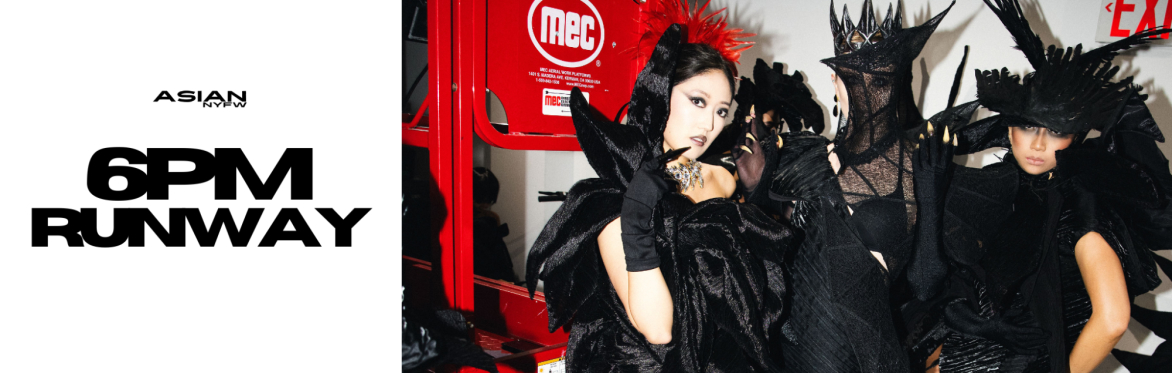
Two days into that week, at 641 West 42nd Street, a separate event called Asian New York Fashion Week will stage its own runway. Same city, same week, different calendar entirely.
Who are the Asian designers at New York Fashion Week 2026?
The Asian and Asian American designers on the official September 2026 NYFW schedule include Prabal Gurung, the Nepali American designer who has shown in New York since 2009, Bibhu Mohapatra, the Indian American designer known for eveningwear, and Sabyasachi, which is new to the official calendar this season. They appear alongside Anna Sui, Khaite, Kozaburo, Zankov and others on a schedule of roughly 70 shows running September 10 through 15.
Worth being precise about a distinction the trades tend to blur. Gurung and Mohapatra built their houses in the United States and are American designers by any reasonable definition. Sabyasachi is an Indian house, headquartered in Kolkata, arriving in New York with a global business already built. Putting all three under one heading called Asian representation flattens the difference between a diaspora designer who spent fifteen years earning a slot and an international brand that bought a plane ticket. Both stories are interesting. They are not the same story.
What it takes to get on the official calendar
The CFDA calendar is not a ranking, and it is not a gate in the way people outside the industry imagine. It is a schedule. But getting on it still costs.
A New York runway show is expensive in a way that has almost nothing to do with the clothes. There is the venue, the production, the lighting and sound, the casting, hair and makeup, the fittings, the seating chart, the PR firm that gets editors into the room, and the samples themselves, which for an eveningwear house can each represent weeks of labor. Designers who have done it describe six figures for fifteen minutes. A presentation costs less than a show, which is part of why so many emerging designers do one.
That math is the filter. It is not a taste committee keeping people out, it is capital, and capital in fashion has never been evenly distributed. A designer without an investor, a licensing deal or a wealthy family behind them is not choosing between the official calendar and something else. They are choosing between the official calendar and rent.
What a separate platform actually does
Asian NYFW exists in that gap. Its September showcase runs September 12 at Lavan Midtown on West 42nd Street, in two slots, one in the mid afternoon and one in the evening, and organizers are billing this season as their first immersive runway, a format that turns the traditional runway into something closer to an interactive space than a seated show. Designers appear by invitation.
The temptation is to write a platform like this as the consolation bracket. That framing is lazy and it is also not what these events are for. A separate showcase does things the official calendar structurally cannot. It can put a designer in front of buyers and press at a fraction of the cost. It can program around a shared audience rather than a shared aesthetic. It can take a risk on someone with three seasons of work and no investor.
The honest question is not which one is legitimate. It is who each one serves. The official calendar serves designers with the infrastructure to convert a show into orders. A platform like Asian NYFW serves designers who are still building toward that, plus a community audience that wants to see the clothes and does not care whose calendar it is on. Those are different jobs.
The part nobody in the room says out loud
There is a version of this week that gets written every season, in which Asian designers are having a moment. It has been written most seasons for about a decade.
The more useful measure is not how many Asian names appear on a schedule in September. It is how many are still there in five years, how many have wholesale accounts that renew, how many have raised money on terms that did not cost them the company, and how many have a successor in the studio. Fashion is generous with attention and stingy with capital, and attention does not compound.
Gurung is instructive here precisely because he is not new. He has spent his career being asked to speak for a category while running a business that has to survive the same margin pressure as everyone else's. Longevity in this industry is its own argument, and it is a quieter one than a debut.
What to watch this week
Watch the front rows, because who a brand seats tells you who it thinks its customer is. Watch whether Sabyasachi's arrival is covered as a fashion story or an India story, since the difference reveals what the American press thinks it is looking at. Watch which designers from the Asian NYFW showcase get written up anywhere outside community media, which is the actual test of whether a parallel platform builds a bridge or a cul de sac.
And watch what happens in February. A designer who shows twice is building something. A designer who shows once was having a moment.
New York Fashion Week runs September 10 through 15. The Asian NYFW showcase is September 12 at Lavan Midtown. Both are worth your attention, for different reasons, and neither is the lesser event.
Related 88tumble coverage: Kayla Wong Moved Lang Out of Chinatown. What That Trade Costs. and K-Beauty Is a $4 Billion US Market. Asian Groceries Sold It First.