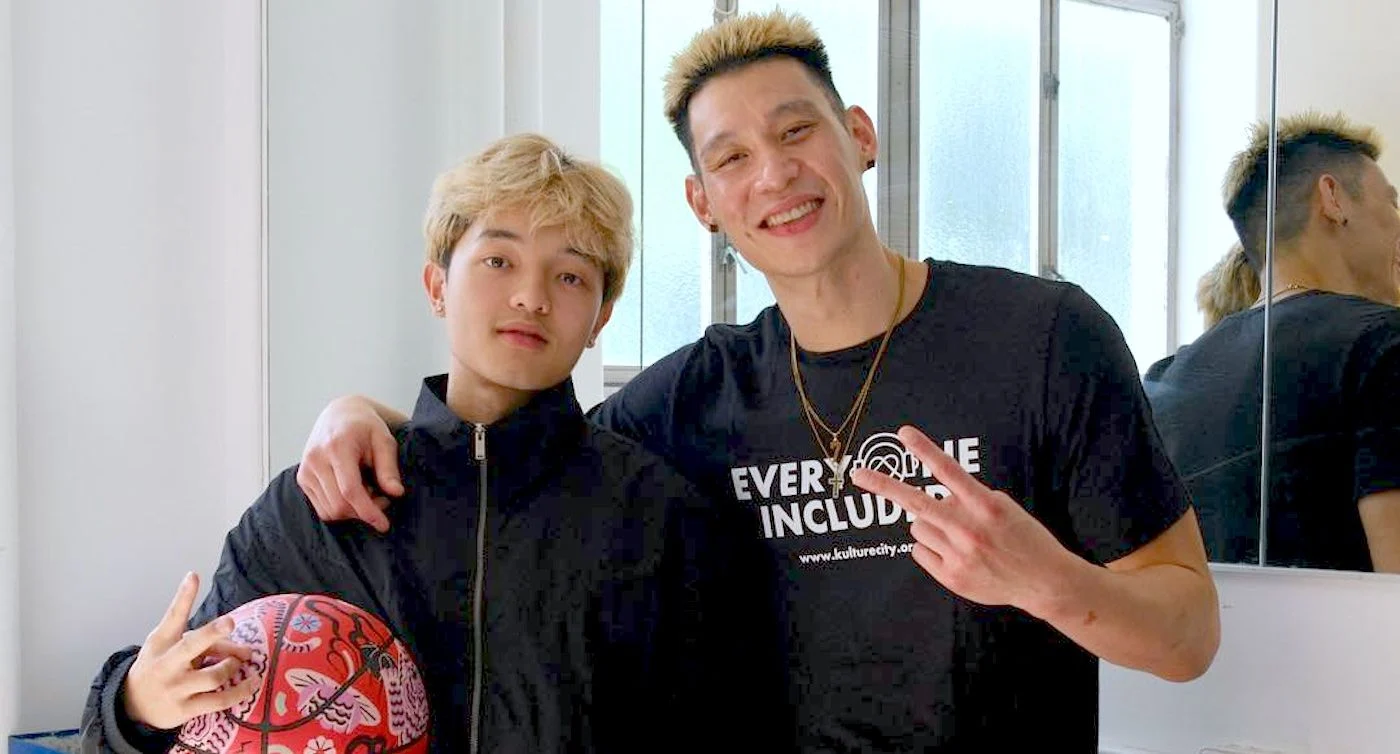
The second annual Jeremy Lin Asian American basketball camp ran July 23 through 26, 2026, at Menlo College in Atherton, California, with ten AAPI collegiate players. Most of the four days happened away from the court, in workshops on financial literacy, name-image-likeness deals, and what Lin calls joy-based versus fear-based leadership.
The slogan on the back of the players' shirts read "redefine what's possible." That is a camp T-shirt line. It is also a fairly precise description of the problem Lin is trying to solve.
What is the JLIN NextGen Basketball Camp?
JLIN NextGen is a four-day invitational camp founded by Jeremy Lin for elite Asian American and Pacific Islander college basketball players, held at Menlo College's Haynes-Prim Pavilion. It combines on-court skill work with off-court sessions on mindset, identity, strength and recovery, financial literacy, and athlete branding. The 2026 edition was its second year and hosted ten collegiate players, men and women.
Lin, who retired last August after nine NBA seasons plus stints in China and Taiwan, has since moved into broadcasting, joining ESPN as an analyst during the NBA Finals and calling games during Summer League. He is not running this camp from a distance.
Why he is on the floor sweating
Plenty of athletes lend a name to a camp and take a photo. Lin ran drills. He showed the men how he gets to his left-handed scoop layup and watched them copy it. He set screens for the women, initiated dribble handoffs, rolled hard to the rim, crashed the glass. By the third day he was soaked.
"They're working, I'm working," he told the San Francisco Chronicle. "We're in it together. We're on this journey of life together."
He calls it sweat equity. It also produces things the classroom sessions cannot. Radhika Garapaty, a sophomore guard at Yale who came out of Notre Dame High School in San Jose, said she studied Lin's stretching routine and noticed how much of it was breath work. She is adding it to her own sessions. That transfer only happens if the person teaching is actually in the gym.
The thing nobody wants to say out loud about Asian American basketball
Lin says it directly. Talking about what he hopes the camp gives players, he said the goal is "changing their mindset, having them have perspective shifts or learning things that I had to learn the hard way, or I had to take years to learn. Hopefully that can even the playing field for some of them because a lot of them, being Asian and looking the way they look, it is realistically not an even playing field."
That is a nine-year NBA veteran, a Harvard graduate, a man who once scored 38 points against Kobe Bryant at Madison Square Garden, saying the field is not level and he knows it because he played on it.
Myles Che, a junior guard at St. Mary's from Walnut, described the same thing from inside a current career. "It's something I've dealt with my whole life," he said. "It's something I wouldn't say I got used to, but it's just something that comes along with the game. At the end of the day, you're an Asian American and you choose to play this sport and you choose to win at a high level. Those things are gonna come with it."
The most common response to this reality has been to wait for another breakout. Find the next Lin, and the doubt resolves itself. That approach has now been tested for fourteen years, and the results are in.
Infrastructure over miracle
The camp is a different theory of the case. A breakout star is a single point of failure. If the entire argument for Asian American basketball talent rests on one player's career arc, then an injury or a bad season resets the conversation to zero.
A pipeline works differently. Ten players a year, each with a network, financial literacy, a handle on NIL, and a peer group who understands the specific texture of being the only Asian player in a gym, produces coaches, agents, executives, and broadcasters as well as players. Some of these ten will not play professionally. That does not make the camp a failure. It makes it a distribution mechanism for the knowledge Lin had to buy at full price.
The financial literacy and NIL sessions matter more than they sound. College athletes now negotiate their own value in a market that rewards whoever knows the rules. Athletes without family experience in that market, which describes many first- and second-generation players, start behind on information rather than talent.
What Lin is actually replacing
The most revealing thing he said had nothing to do with basketball. Describing what he missed growing up, he said: "I missed out on that a lot. If they can have a deeper enjoyment, I would be very happy."
He has said he wants the camp to create the community he yearned for and never had. He came up in Palo Alto, graduated from Palo Alto High School in 2006, went undrafted out of Harvard, and signed with the Warriors in 2010, largely alone at every step. There was no room where ten people looked like him and understood the specific weight of the assumptions.
Garapaty put the succession plainly. "Jeremy is the trailblazer for all of us. He's essentially the blueprint that we get to follow."
A blueprint is more useful than a miracle. It can be copied.
Sources: San Francisco Chronicle reporting by Harrison Rich, via Yahoo Sports.