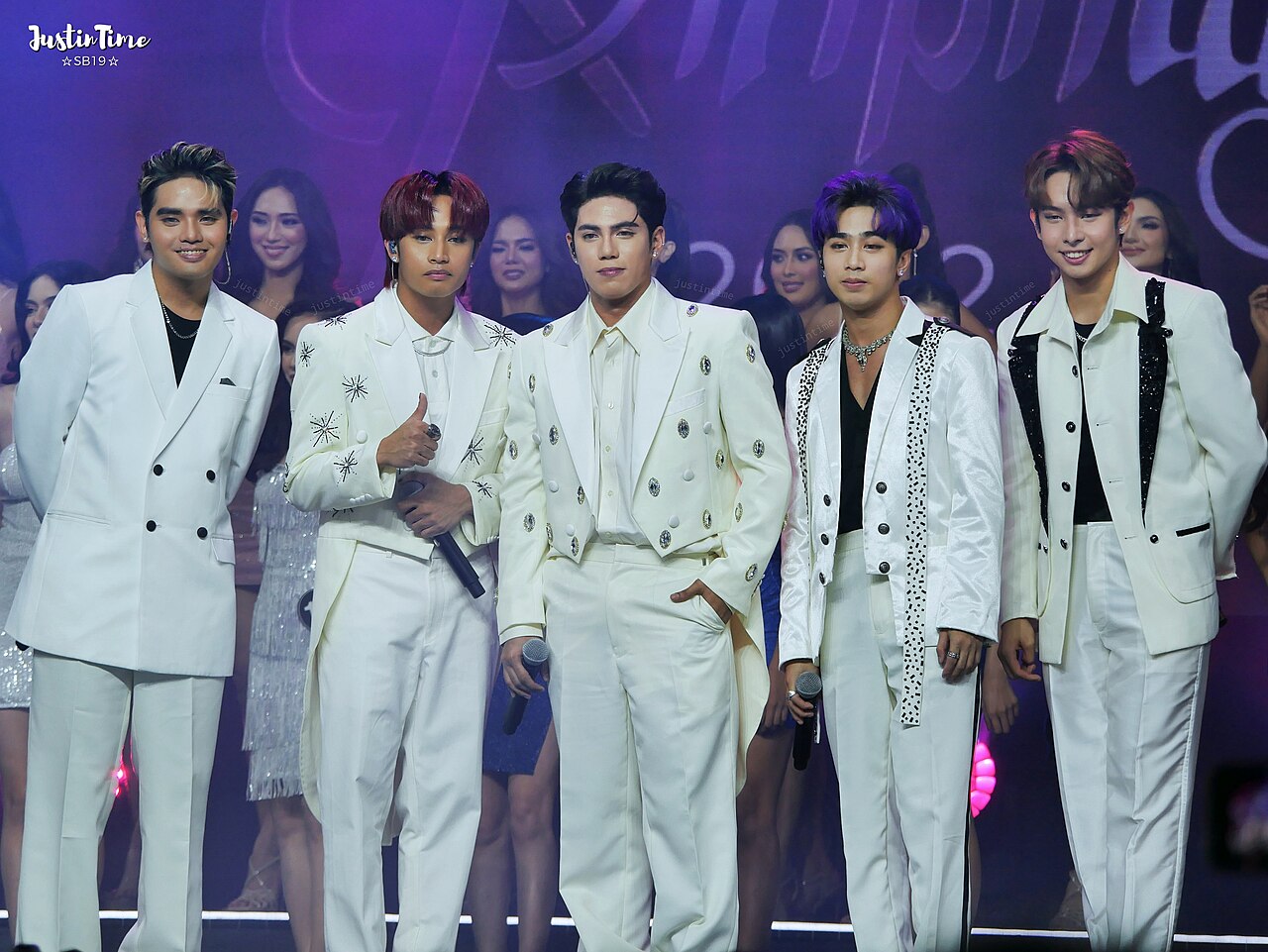
SB19 played Lollapalooza 2026 on Thursday, July 30, taking the Allianz Stage in Grant Park from 3:30 to 4:30 in the afternoon. Pablo, Josh, Stell, Ken, and Justin opened with "DAM" and moved straight into "GENTO," the song that has done more than any other to push P-pop past the Philippines. They are the first homegrown Filipino act to perform at the Chicago festival, and the significance of that is less about the milestone than about the context it happened in.
Why a Lollapalooza booking is different
Lollapalooza is a general market American festival. It ran July 30 through August 2 with more than 170 artists across eight stages, and the 2026 lineup happened to include a striking number of Asian acts: JENNIE among the headliners, I-DLE making their festival debut, aespa, and Sri Lankan Tamil Australian artist Ecca Vandal, whose album LOOKING FOR PEOPLE TO UNFOLLOW arrived in May.
None of them were programmed as a cultural showcase. There was no Asian block, no heritage stage, no framing that positioned them as a themed segment of the weekend. They were slotted the way any act is slotted, by draw and by fit. That is a meaningfully different proposition from what an Asian artist gets at a festival built around Asian identity, and it is worth being precise about the difference rather than collapsing the two into one representation story.
The contrast with 88rising
Head in the Clouds, 88rising's festival, returns to Pasadena in August with KATSEYE at the top of the bill. That event does something Lollapalooza structurally cannot: it builds an audience around a shared pan-Asian identity and lets artists play to a crowd that arrives already fluent in the reference points. The value of that is enormous, and anyone who has stood in that field knows it.
But a dedicated festival also has a ceiling. It confirms an audience rather than expanding one. The Lollapalooza slot is the other kind of win, the one where an act has to convert people who wandered over between sets. SB19 got an hour on a Thursday afternoon, the shift where you are playing to whoever showed up early, and that is exactly the test that matters for a group trying to build a US touring base.
Who SB19 are
For readers meeting them here: SB19 formed in Manila in 2016 under ShowBT Philippines, a subsidiary of a Korean entertainment company, and the five members trained under a Korean style system before debuting in 2018. Pablo writes and produces much of the group's material, which is less common in this corner of pop than the packaging suggests. They spent their first years being ignored, then broke through domestically, then became the act that made "P-pop" a category label rather than a description.
The Korean training lineage is worth naming because it gets used against them. The accusation that P-pop is derivative of K-pop treats a shared production methodology as a lack of authorship, which is a standard that nobody applies to, say, American rock bands who learned from British ones who learned from American blues musicians. Method travels. What SB19 do with Tagalog lyrics, Filipino musical references, and a fandom rooted in a specific national experience is not a copy of anything.
Who was actually in the crowd
The Filipino American presence at these shows has become its own phenomenon. Fil-Am fans travel for SB19 dates the way K-pop fandoms travel, coordinating banners and chants across state lines, and Chicago drew from a Midwest Filipino community that rarely gets a marquee act of its own. The A'TIN fandom, as SB19 supporters call themselves, functions as distribution infrastructure at this point, doing streaming pushes and ticket organizing that a label would otherwise have to buy.
That is the diaspora story here, and it is a more useful one than the first ever framing. SB19 is a Philippines based group. The people who made a Thursday afternoon Chicago set feel like an event were largely Filipino Americans, and their labor is what turns an international booking into an American foothold.
It is also unpaid labor, which is the part fandom discourse tends to romanticize. Organizing group ticket buys, running translation accounts, coordinating streaming, and physically showing up in numbers is promotional work that a label would otherwise pay an agency to do. Filipino American fans have done it for years with no compensation and limited acknowledgment, and one of the fairer questions to ask of any breakout act is what flows back to the community that built the American audience.
What P-pop needs next
P-pop has spent several years being described as the next K-pop, which is both flattering and lazy. The Korean industry built its global position on two decades of state backed export strategy, training systems, and distribution deals. The Philippine industry does not have that apparatus, which means acts like SB19 are doing the same work with far less scaffolding.
Southeast Asian artists more broadly are gaining domestic chart share against Korean imports in their own markets, a shift that has been building for a couple of years. The open question is whether that translates into sustained US infrastructure: American label partnerships, radio, a headline tour that fills rooms without a festival crowd already assembled.
One Lollapalooza slot does not answer it. It does establish that the booking was possible, which a year ago was not obvious. For a genre that has been asked to prove itself on someone else's terms, an unremarkable Thursday afternoon set on a general market stage is a better result than a standing ovation at a showcase.
Sources: Rolling Stone Philippines; Philstar; Music Times on the 2026 lineup.