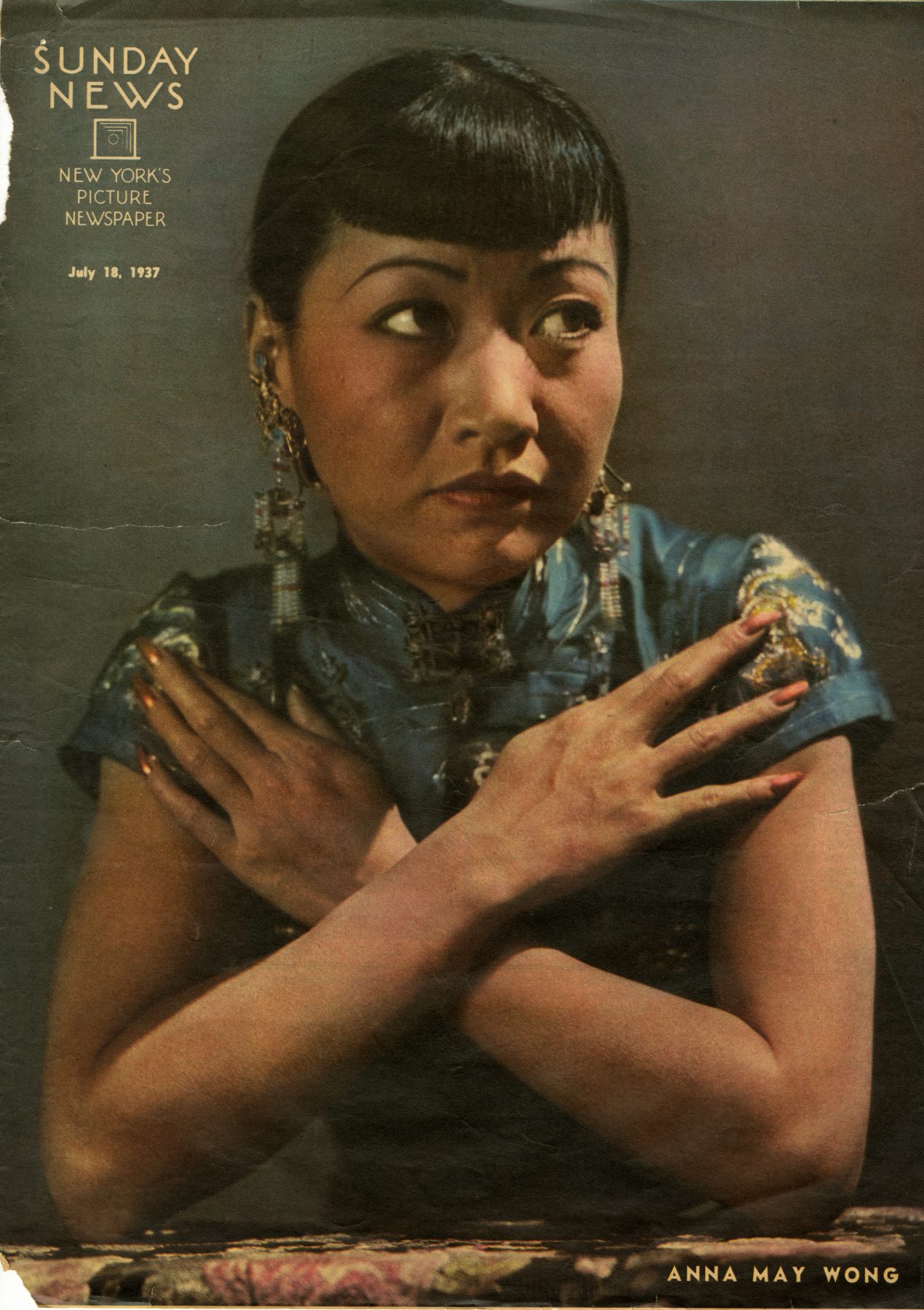
The Anna May Wong exhibit in Los Angeles closes on August 30, 2026, which gives you a few weeks to see it. The Icon: Anna May Wong has been on view at the Chinese American Museum at 425 N. Los Angeles Street in downtown LA since May 16, 2025, and it is the most substantial public accounting of Wong's career currently standing in the city where she built it.
Go. Then read the show against itself, because the honest version of Wong's story is not the one that fits on a quarter.
What is on view at the Chinese American Museum
The exhibition pays tribute to Wong as the first Chinese American movie star, more than 100 years after she launched her film career. She appeared in over 70 films, plays, radio programs, and television shows across four decades. The museum frames her as a trailblazer who challenged conventions and paved the way for the Asian American actors who followed, which is accurate and incomplete in the way institutional wall text usually is.
The museum's own materials do name the harder part. Wong was repeatedly typecast into stereotypical roles. She fought racist portrayals of Asians publicly, and she spoke openly about how limited the opportunities were for Asian actors compared with the white performers who were recruited to play Asian characters in yellowface.
That last clause is the exhibit. Everything else is context.
The role she did not get
The defining fact of Anna May Wong's career is not what she starred in. It is what she was refused. Hollywood in her era operated under production codes and casting conventions that made a Chinese American lead in a romantic story with a white actor effectively impossible, while simultaneously producing a steady stream of major Asian roles that went to white actors in makeup. Wong was available. She was famous. She was passed over anyway, and she said so on the record, which cost her.
She spent significant stretches of her career in Europe, where the ceiling sat higher, and she came back to an American industry that had not moved. That pattern, a performer leaving to find work equal to their ability and returning to the same wall, is not a historical curiosity. Ask any working Asian American actor about the arithmetic of auditions.
Why the Anna May Wong exhibit matters right now
Wong got a US quarter in 2022 as part of the American Women Quarters Program. She has been rediscovered, honored, and posthumously corrected several times over the last decade, and each round of it makes her a little easier to file under progress.
The value of standing in a room with her actual career is that it resists that. Seventy-plus credits across forty years, most of them roles she would not have chosen, is not a triumph narrative. It is a working life spent negotiating with an industry that wanted her visible and contained at the same time. The museum's framing of her as an icon is earned. The show's usefulness is that it does not stop there.
Planning your visit
The Chinese American Museum sits in El Pueblo de Los Angeles, in the Garnier Building, the oldest surviving structure from LA's original Chinatown. That location is not incidental to a Wong exhibit. She was born in Los Angeles in 1905 to a family that ran a laundry, and she grew up in and around the Chinatown that the city later demolished to build Union Station.
Two other exhibitions are worth your time in the same visit. (Be)Spoken: Poems from Our Asian American Voices, co-curated by rapper and poet Jason Chu and featuring seven spoken word artists, runs through September 6, 2026. Seasons in Cosmos: Works by Diana Shuiu Wong, the first show in the museum's newly expanded gallery, runs through April 25, 2027. The permanent exhibitions, including Origins and the recreated Sun Wing Wo General Store and Herb Shop, are open year-round.
The short answer
The Icon: Anna May Wong is on view at the Chinese American Museum in Los Angeles through August 30, 2026. Admission and hours are listed on the museum's site. After that date, the most complete Anna May Wong exhibition in her own city goes away, and what remains is the quarter.
Related reading from 88tumble: Asian Americans in fashion, on the same negotiation playing out in a different industry.