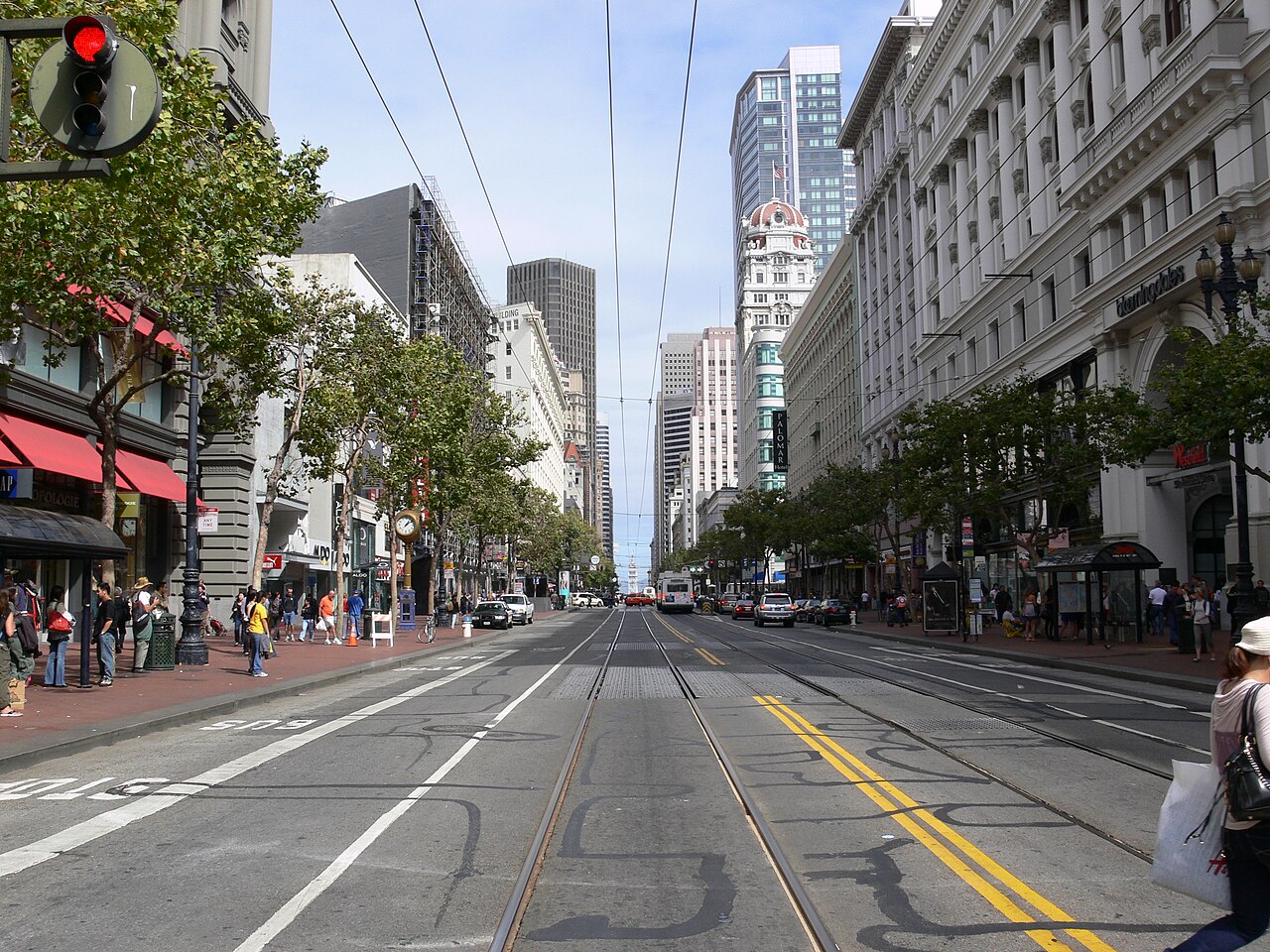
Jollibee opened at 934 Market Street in San Francisco at 9 a.m. on Friday, July 31, 2026, and the line had started forming around 7:45 the night before. Hundreds of people turned out. The first hundred customers were promised a year of free Chickenjoy. It is the chain's first San Francisco location since the Fourth Street store near Yerba Buena Gardens closed in 2011, and plans for this one have been in motion since 2020.
Six years of permitting and a pandemic sit between the announcement and the doors opening. That is the least interesting part of the story and the part most coverage led with.
Why do people line up overnight for Jollibee?
The straightforward answer: for Filipino Americans, Jollibee is not fast food, it is a reference point. It is the birthday party, the after church meal, the thing your titas argue about. Chickenjoy, Jolly Spaghetti with its sweet banana ketchup sauce, and the Peach Mango Pie are not competing with McDonald's on quality. They are competing on memory, and memory does not lose.
The second answer is geographic. San Francisco has a substantial Filipino population and a long Filipino history downtown, and it has spent fifteen years without the most recognizable Filipino brand in the world anywhere in the city. Daly City has had locations. Vallejo has had locations. San Francisco proper, the city with SoMa Pilipinas designated as a Filipino cultural heritage district in 2016, has not. That gap was noticed.
The Filipino history downtown that predates the chain
The Market Street opening sits a few blocks from ground that Filipino San Francisco lost once already. Manilatown ran along Kearny Street from the 1920s, a community of manongs, meaning the first wave of Filipino men recruited as agricultural and service labor, who lived in residential hotels because exclusion era housing patterns and anti miscegenation laws left them few other options.
The International Hotel at Kearny and Jackson was the last of it. Elderly Filipino and Chinese tenants fought eviction through the 1970s in a campaign that became one of the defining housing struggles in the city's history, and they were removed by force in August 1977. The building came down. What replaced Manilatown was a parking lot and, eventually, a redevelopment story that everyone involved understood as erasure.
SoMa Pilipinas, designated in 2016 as a Filipino cultural heritage district, is the community's second attempt at a durable footprint downtown, and it exists in part because the first one was demolished. Knowing that history changes how a line down Market Street reads. It is not just enthusiasm for fried chicken. It is a community occupying downtown commercial space on its own terms in a city that once cleared it out.
The location is the argument
934 Market Street is in the stretch of downtown San Francisco that has absorbed more national commentary about urban decline than almost any other block in America. Retail vacancies there have been a talking point for years, cited in arguments about crime, remote work, and civic failure, usually by people who have not walked it.
So the image of a line snaking down Market at eight in the evening for a Filipino chain is not incidental. It is a rebuttal, and a specific one. Downtowns do not get revived by abstractions about foot traffic. They get revived when somebody opens a business that a real community will cross a bridge for. Filipino San Franciscans and Filipino Bay Area residents more broadly showed up for this one in numbers that most heavily subsidized activation campaigns never generate.
What the chain represents that American brands don't
Jollibee Foods Corporation is a Philippine company. It has more than a thousand locations in the Philippines and has expanded aggressively into North America, buying stakes in other chains along the way. When a Jollibee opens in a US downtown, the capital, the recipes, and the brand all originate outside the United States and travel with the diaspora.
That inversion matters. The usual immigrant food story in American media features a family restaurant, a hard won following, and a gentrification threat. This is a different shape: a multinational from the sending country planting a flag in the receiving country and drawing a crowd of people who grew up with it on both sides of the ocean. It is closer to what Korean and Japanese brands have done in Los Angeles than to the neighborhood restaurant narrative, and it deserves its own frame.
It also complicates the usual authenticity argument, and productively so. Nobody claims Chickenjoy is traditional Filipino cooking, because it plainly is not. It is a Philippine interpretation of an American product, sold back into America to people who first encountered it in Manila or Quezon City or a Daly City strip mall. Sweet spaghetti exists because American canned goods and banana ketchup were what postwar Philippine kitchens had. The whole menu is a record of colonial contact, and Filipino Americans eat it with full awareness of that, which is a more sophisticated relationship to food and history than the authenticity discourse usually allows for.
There is a real trade off underneath the celebration, though, and it deserves saying. A Philippine multinational opening downtown is not the same as a Filipino owned independent restaurant opening downtown, and the two compete for the same rare thing, which is affordable commercial space in a city that has very little of it. Jollibee's arrival is good news. It is not a substitute for capital reaching Filipino small business owners in SoMa, and it should not be counted as one.
What to watch after the opening week rush
Opening lines are not a business model. Every high profile debut in a downtown corridor draws a crowd for a fortnight. The real test is whether 934 Market is still busy in February, when the novelty is gone and the weather is bad and the free chicken has been claimed.
The favorable read is that the customer base here is not the office worker who may or may not come back to the building. It is a regional Filipino community that will make the trip on purpose, plus the SoMa Pilipinas corridor a short walk away. The unfavorable read is that Market Street's problems are structural and one restaurant does not touch them.
Both can be true. But if you have spent the last few years reading that nobody wants to be in downtown San Francisco anymore, the correct footnote is that several hundred people slept on the sidewalk there in July for fried chicken, and they were not confused about where they were.
Sources: Mission Local; AsAmNews; The San Francisco Standard.