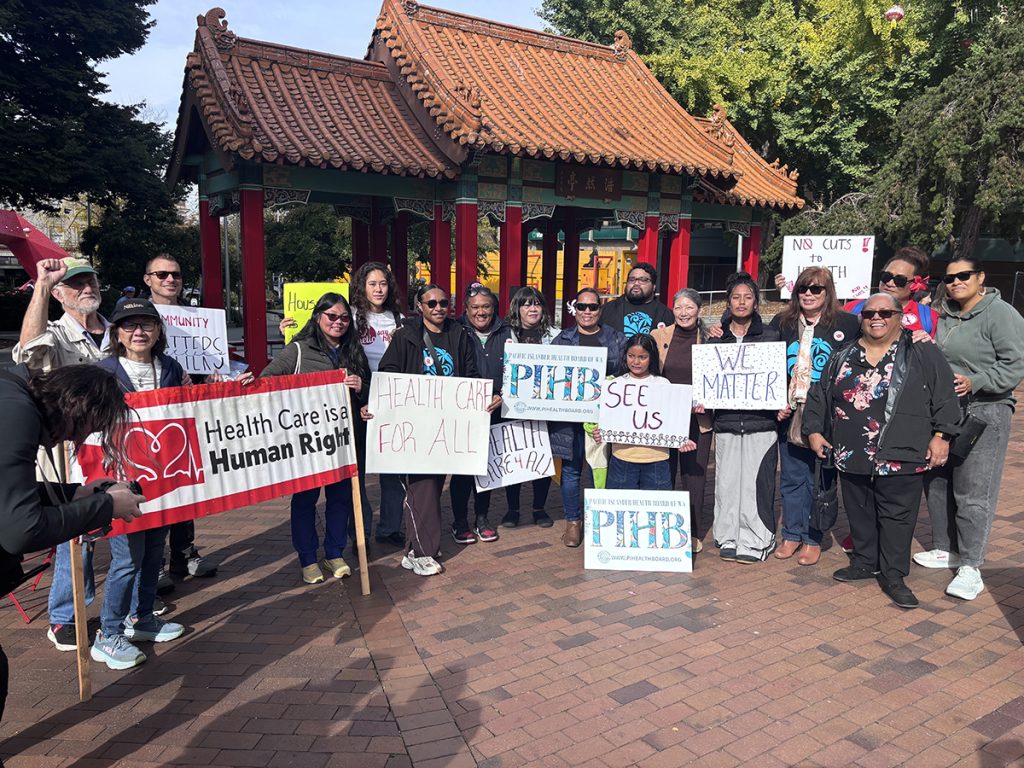
More than 11,000 immigrants, refugees and asylees in Washington state lost their Apple Health coverage on October 1, 2026, according to AsAmNews, as provisions of the federal law known as H.R. 1 began to take effect. Asian American, Native Hawaiian and Pacific Islander leaders say their communities are being hit hard, especially Pacific Islander families from nations in the Compact of Free Association, and they are asking the state to step in.
What changed on October 1?
Apple Health is Washington's Medicaid program. Under H.R. 1, refugees and asylees are losing health coverage, and the law also imposes new work reporting requirements starting January 1, 2027, AsAmNews reported. Covered adults will need to show at least 80 hours a month of what the law calls community engagement, which can include work, job training, community service, school enrollment or a combination.
Supporters of work requirements argue they encourage employment. But the data suggest most Medicaid adults already work or qualify for exemptions. KFF data cited by AsAmNews found that 92 percent of Medicaid adults already meet work requirements or qualify for an exemption. The bigger risk is paperwork: eligible people losing coverage because they could not navigate the reporting system.
Who is most affected?
AANHPI communities account for 43 percent of Washington's undocumented population, according to AsAmNews. The cuts also land on refugee families from Southeast Asia, South Asia and elsewhere, and on COFA communities, which leaders describe as facing an access crisis.
COFA refers to the Compacts of Free Association between the United States and the Federated States of Micronesia, the Republic of the Marshall Islands and the Republic of Palau. Under those agreements, citizens of those nations can live and work in the United States. Washington has one of the largest COFA communities on the mainland, and many families came in part because of the long health consequences of U.S. nuclear testing in the Marshall Islands. Health coverage for these families has been a fight for decades.
What community leaders are saying
"For an elder, losing Apple Health can mean choosing between medicine and rent," Kendee Yamaguchi, CEO of the Asian Counseling and Referral Service, told AsAmNews.
Sili Savusa, director of the Pacific Islander Community Association, urged lawmakers to "protect AANHPI families, reject budget cuts that leave people without essential care."
State Representative Sharon Tomiko Santos put it simply: "The AANHPI community deserves to be seen."
Why the paperwork is the real danger
Coverage losses rarely happen because people decide they do not need care. They happen because a renewal form goes to an old address, because the instructions are only in English, because a reporting portal requires an email account an elder does not have, or because a single missed deadline ends coverage.
AANHPI communities are especially exposed to that kind of administrative loss. Many households speak languages that government systems rarely support well, from Chuukese and Marshallese to Khmer and Burmese. Trusted community organizations like ACRS and PICA often end up doing the translation and navigation work that keeps families covered, usually without funding to match.
What Washington can do
States cannot simply undo a federal law, but they have options. They can fund state-only coverage for groups cut off from federal Medicaid. They can make reporting as simple as possible, with in-language outreach and automatic verification using data the state already holds. And they can fund the community organizations that will be answering families' questions through the January deadline and beyond.
The leaders quoted by AsAmNews are asking for exactly that. For the 11,000 people who lost coverage on October 1, the next few months will decide whether a federal policy change becomes a permanent gap in care.
What families should do now
Anyone in Washington who received a notice about Apple Health should not ignore it. Contact the Health Care Authority or a community organization such as ACRS or PICA for help understanding options. Some people may qualify for other coverage, and others may be able to appeal. The worst outcome is losing care simply because no one explained the next step.