The 2026 Asian American Emmy nominations tell two stories that do not fit together. Season two of Lee Sung Jin's Beef pulled 16 nominations when the Television Academy announced its slate on July 8, including Outstanding Limited or Anthology Series, plus writing and directing nods for Lee himself. Across the entire slate, only 18 of the 91 nominated performers were Asian, Black, or Latino.
That is down from 24 the year before, and down from 30 in 2024. Two consecutive years of losing six actors of color. The 78th Primetime Emmy Awards air September 14 at the Peacock Theater in Los Angeles.
How many Asian actors were nominated at the 2026 Emmys?
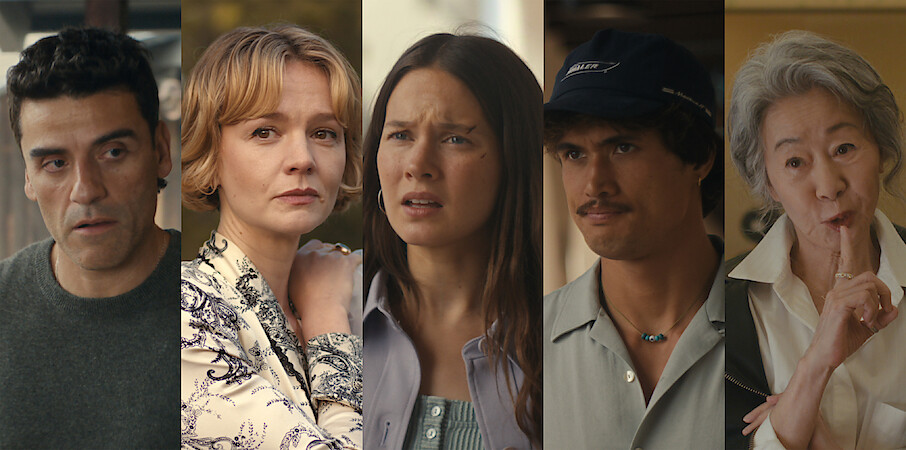
A small number, concentrated almost entirely in one show. Youn Yuh-jung earned a supporting actress nomination in a limited or anthology series for playing Chairman Park, a Korean billionaire who buys a country club, in Beef season two. Charles Melton earned a supporting actor nomination for the same series, plus a second nod as an executive producer. Riz Ahmed, the British Pakistani actor and rapper, was nominated for lead actor in a limited series for Bait. Sepideh Moafi, an Iranian American actor, earned a supporting actress in a drama nomination for HBO's The Pitt, becoming the first woman of Iranian descent recognized in the dramatic acting categories.
Four performers. One of them made history. Three of the four are attached to a single title or a single first.
What Beef actually accomplished
Sixteen nominations is not a consolation prize. Lee Sung Jin got recognized as a writer, a director, and a producer, which is the trifecta that converts a hit into leverage. Oscar Isaac was nominated for lead actor and as an executive producer. Carey Mulligan took lead actress. The show's second season, which moved the story into a world of country clubs and inherited money, landed with critics and with the Academy in a way sophomore seasons of anthology hits usually do not.
Lee told Deadline that the season taught him the reason his collaborators keep making the show is to tell stories that reach deeper truths. That is a generous read of a very difficult second act.
It is worth naming what Beef did structurally, not just creatively. Season one made a Korean American rage comedy legible to a mass audience without translating it down. Season two proved that was not a fluke, and did it while expanding the cast well beyond an Asian American core. Melton, in particular, moved from teen-drama recognition into the kind of adult supporting work that builds a durable career.
Why one show carrying a community is a problem, not a win
Here is the uncomfortable arithmetic. Remove Beef from the 2026 slate and Asian American representation in the acting categories collapses to Moafi and Ahmed. One drama supporting nomination. One limited series lead. In a year with 95 available acting slots.
This is what industry people mean when they talk about the difference between a moment and a pipeline. A moment is one show absorbing an entire community's visibility, which looks like progress on announcement day and disappears the year that show ends. A pipeline is twelve shows each carrying two or three people, so no single cancellation resets the count.
The 2024 slate looked closer to a pipeline. Thirty actors of color, boosted by Shōgun and Reservation Dogs. Both of those have concluded their Emmy runs. The number fell the next year, then fell again by the same margin. That is not volatility. That is a trend line.
The categories where nobody of color made the cut
Three acting categories at the 2026 Emmys were filled entirely with white performers: Outstanding Lead Actress in a Limited or Anthology Series or Movie, Outstanding Guest Actor in a Comedy Series, and Outstanding Guest Actress in a Comedy Series.
The supporting actress in a drama race offers the sharpest illustration. The Pitt picked up four of the nominations in that single category. The show has a genuinely diverse ensemble. Moafi was the only woman of color from it to land a nomination, while Isa Briones, Supriya Ganesh, and Shabana Azeez were passed over. A show can be full of Asian American actors and still produce one Asian American nominee, because voters tend to consolidate around a single performance rather than spread recognition across an ensemble.
The context nobody at the ceremony will mention
This decline is arriving in the middle of a coordinated political campaign against diversity programs across American institutions, including studios and networks. Development slates get set two and three years out. The shows competing in 2026 were greenlit in a very different climate than the one their creators are working in now.
Which means the 2027 and 2028 numbers are already partly determined, and there is no reason from the current data to expect them to improve on their own. The 88tumble read is that Emmy nominations are a lagging indicator. They measure decisions made by executives three years ago, not sentiment expressed by voters last month.
What to watch on September 14
Youn Yuh-jung already has an Oscar for Minari. A win here would put her in rare company across both academies. Melton has the more interesting long game, since a supporting win in his first major awards cycle tends to reset an actor's asking price and the kind of scripts that reach him.
Lee Sung Jin's writing and directing nominations may matter more than either. Showrunners who win in craft categories get to greenlight the next generation of work, and the pipeline problem gets solved by people with hiring authority, not by nominees.
Sixteen nominations for one show is worth celebrating. It is also worth asking who is supposed to carry the number when that show is finished.
Sources: TheWrap 2026 Emmys Diversity Report, AsAmNews, Deadline.