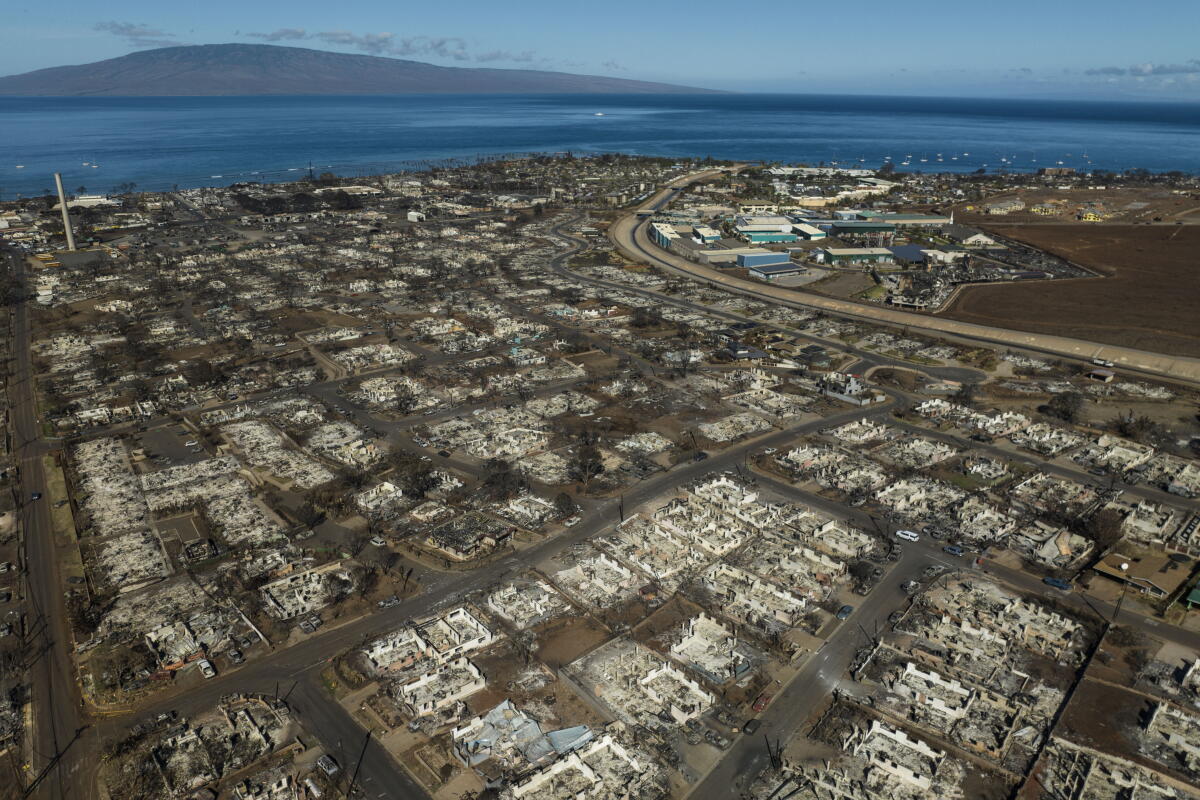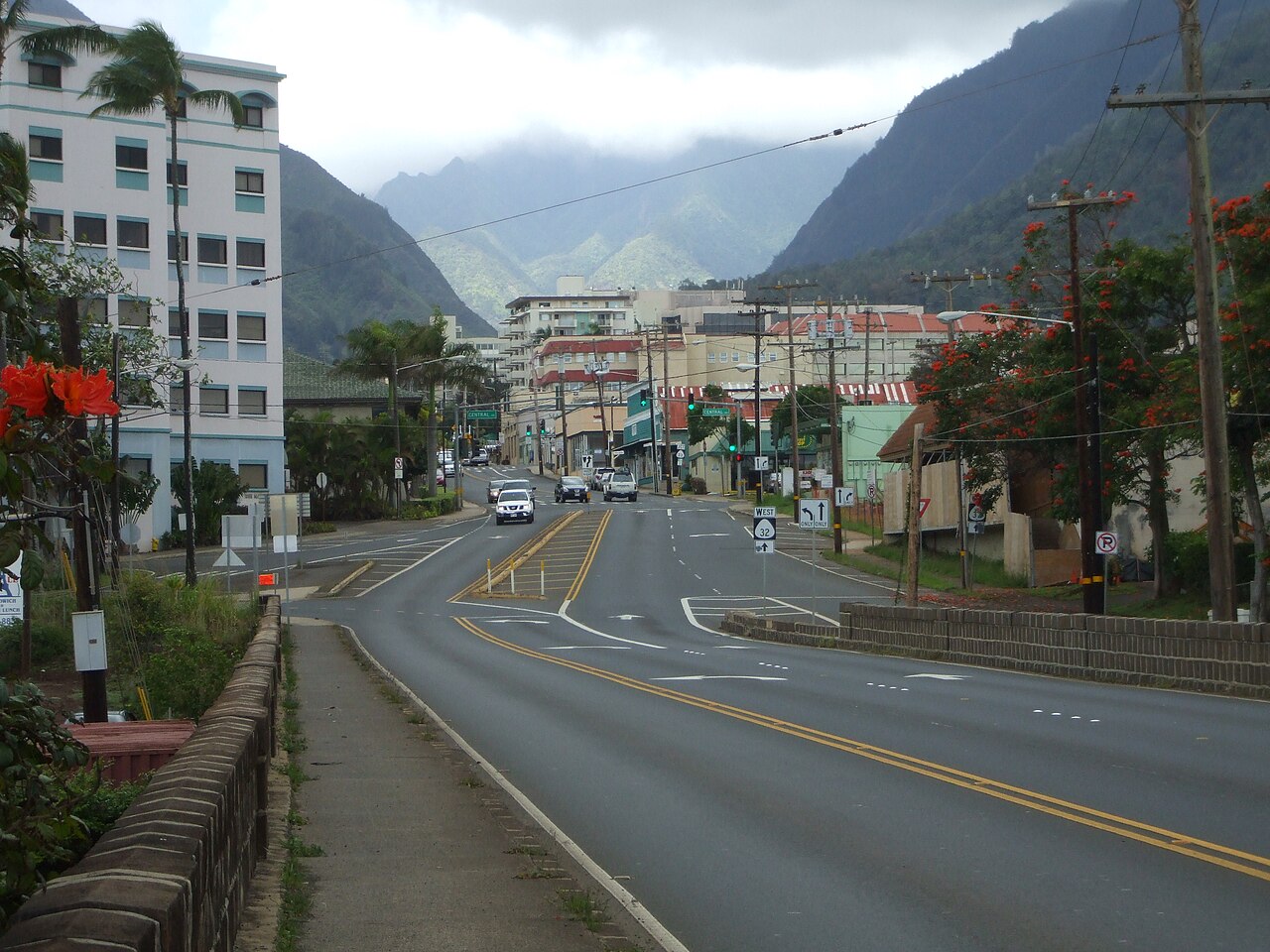
Maui outmigration is the story the fire anniversary tends to bury. Three years after the Lahaina fire of August 8, 2023, the island's most urgent crisis is no longer the burn scar. It is that the families who have lived on Maui for generations, Native Hawaiian, Filipino, Japanese, Portuguese, and every combination the plantation era produced, increasingly cannot afford to remain. State Senator Troy Hashimoto, who represents Wailuku, Kahului, Waihee, Waikapu Mauka, and Waiehu, has spent the current session trying to legislate against that arithmetic.
"The biggest challenge we are really facing is: how do we keep this next generation on Maui?" Hashimoto said in remarks reported this month. It is a plain question, and nobody in Hawaii politics has produced a satisfying answer to it.
What is causing outmigration from Maui?
The short version: housing costs outpaced local wages, the fire destroyed thousands of units in a market that already had none to spare, and the service economy that replaced agriculture does not pay enough to close the gap. Families leaving Hawaii are landing in Nevada, Oregon, and Utah, where a mortgage is something a hotel worker or a teacher can plausibly carry. Hawaii has been exporting its own people for years. Lahaina accelerated it.
That framing matters because it changes what counts as recovery. If recovery means rebuilding structures, Maui is making progress. If recovery means the same people living in the same places, the picture is worse, and it is getting worse in a way that permit counts do not capture.
The legislation Hashimoto is pushing
Hashimoto sits as vice chair of the Senate Committee on Housing, and his approach has been unglamorous on purpose. He introduced SB 2552, aimed at cutting the delays baked into affordable housing planning timelines. He is lead introducer on SB 2544, which borrows from British Columbia's BC Builds program by running approval processes concurrently rather than in sequence.
Neither bill is the kind of thing that produces a press conference. Both target the same bottleneck: in Hawaii, an affordable housing project can spend years in review before a single unit exists, and every year of review is another year of rent that a local family may not be able to absorb. The state's broader "Hawaii Builds" initiative, advanced this summer, works the same lever.
In an op-ed published this spring, Hashimoto and his co-authors put the logic bluntly: the state cannot stem the tide of outmigration without taking aggressive action on the biggest cost of living driver, which is housing. Tax relief, in that reading, is a rounding error against a median home price that locals cannot reach.
Why the anniversary coverage misses this
Every August, Lahaina gets a wave of national attention organized around loss and resilience. Both are real. But the retrospective format has a built in endpoint, and displacement does not have one. A family that moved to Las Vegas in 2024 because their rent doubled is not part of the fire's death toll and does not show up in rebuilding statistics. They are simply gone, and the census will register it years later as a quiet demographic shift.
This is a familiar pattern for anyone who has watched Asian American and Pacific Islander neighborhoods on the continent get covered. The dramatic event gets the reporting. The slow economic squeeze that empties the neighborhood afterward gets a paragraph, if that. Maui is running the same script at the scale of an island.
What "local" means on Maui, and why it is an Asian American story
Readers on the continent sometimes assume Hawaii's population conversation is only about Native Hawaiians. Native Hawaiian displacement is central and non negotiable in any honest accounting. But the word "local" in Hawaii carries a specific meaning built over a century, and it includes the descendants of the Japanese, Chinese, Filipino, Korean, Portuguese, and Puerto Rican workers recruited to the sugar and pineapple plantations, families who intermarried across those lines until the categories stopped being clean.
Maui's plantation era ended within living memory. Hawaiian Commercial and Sugar Company, the last sugar operation in the state, shut down its Maui fields in 2016. The workers and their children did not leave. They moved into county jobs, hotels, construction, and small business, and they stayed in Wailuku and Kahului and Puunene because that is where the family land and the family houses were.
What is happening now is the unwinding of that. When a multigenerational household can no longer replace itself, meaning the grandchildren cannot buy anything on the island they grew up on, an entire community structure dissolves quietly. This is the same dynamic that has emptied Chinatowns and Japantowns on the mainland, running at the scale of a county with no adjacent neighborhood to retreat into. There is no cheaper part of Maui. There is only somewhere else.
Who actually leaves
The households most exposed are the ones with the least cushion: multigenerational families in Wailuku and Kahului, hotel and restaurant workers, public employees, and the working class Filipino community that has anchored Maui's labor force since the plantation recruitment waves of the early twentieth century. Hashimoto's district is precisely this. It is not a tourism district. It is where the people who staff the tourism districts live.
That distinction is worth holding onto, because the visitor economy conversation and the housing conversation get tangled constantly. Short term rental policy is a live fight in Hawaii, and it matters. But a unit converted back from a vacation rental only helps if a local family can actually afford it, and much of the converted inventory prices well above what a Kahului wage supports.
The people leaving are also, disproportionately, the people the island cannot run without. Nurses, teachers, county workers, hotel housekeepers, and the trades that any rebuild depends on. Hawaii has been losing exactly these workers for years, which produces a second order problem: a construction labor shortage in a place that urgently needs to build. An island that prices out its carpenters cannot build its way out of a housing crisis, and that circularity is the part of the story that budget hearings tend to skip.
What to watch next
Three things will tell you whether any of this is working. First, whether SB 2544 and SB 2552 survive with their timelines intact rather than getting amended into symbolism. Second, whether the first time homebuyer measures the Legislature advanced this year translate into closings for local families rather than transplants with mainland equity. Third, whether the units that do get built land at income tiers that Hashimoto's own constituents occupy, not the tier just above them, which is the classic failure mode of affordable housing programs everywhere.
None of that resolves by the anniversary. That is the point. The Lahaina fire was an event with a date. Maui outmigration is a condition, and conditions do not get anniversaries, which is exactly why they run unchecked.
If you are reading coverage this week, the useful question is not how much of Lahaina has been rebuilt. It is how many of the people who lived there are still on the island to move back.
Sources: AsAmNews, August 3, 2026; Maui Now op-ed; Honolulu Star-Advertiser on Hawaii Builds.